
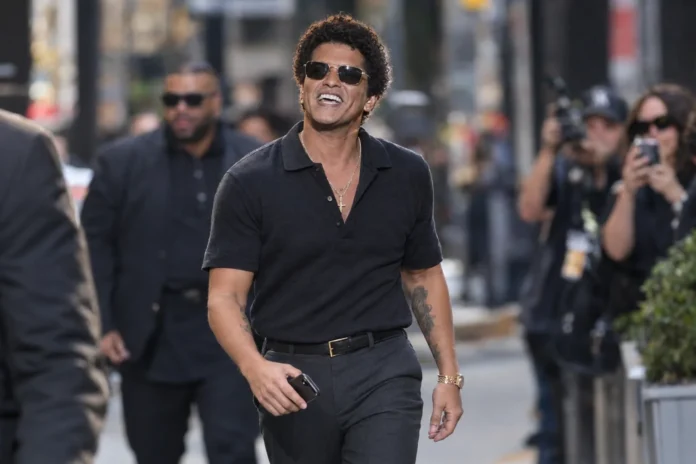
Bruno Mars’ ethnic group is a mix of Puerto Rican, Ashkenazi Jewish, Filipino, and Spanish ancestry, which makes him one of the most multicultural stars in modern pop. For years, fans have seen his curly black hair and light-brown complexion and asked the same question: “What are you?” The honest answer is that he is a bit of everything. His roots run from San Juan to Manila, and even to Budapest and Kyiv. Below, we trace each branch of his family tree and show how that heritage shaped the music the world knows today.
Biography Table
| Field | Details |
|---|---|
| Full Name | Peter Gene Hernandez |
| Nickname/Stage Name | Bruno Mars |
| Date of Birth | October 8, 1985 |
| Place of Birth | Honolulu, Hawaii, USA |
| Age | 40 years (as of 2026) |
| Nationality | American |
| Zodiac Sign | Libra |
| Religion | Raised Catholic |
| Ethnicity | Mixed (Puerto Rican, Ashkenazi Jewish, Filipino, Spanish) |
| Profession/Occupation | Singer, songwriter, record producer, multi-instrumentalist |
| Years Active | 2004–present |
| Education | President Theodore Roosevelt High School, Honolulu |
| Genre/Field | Pop, R&B, funk, soul, reggae, hip-hop |
| Spouse/Partner | Jessica Caban (long-term partner) |
| Children | None publicly known |
| Parents | Peter Hernandez (father), Bernadette San Pedro Bayot (mother, died 2013) |
| Siblings | Eric, Jaime, Tiara, Tahiti, Presley |
| Net Worth | Estimated $175 million+ (estimates vary) |
| Height | 5 ft 5 in (165 cm) |
| Eye Color | Dark brown |
| Hair Color | Black |
| Notable Works | “Just the Way You Are,” “Uptown Funk,” “24K Magic,” “Leave the Door Open,” “APT.” |
| Awards/Honors | 15+ Grammy Awards, multiple diamond-certified singles |
| Social Media | Instagram: @brunomars, X: @BrunoMars |
What Is Bruno Mars’ Ethnic Group?
Bruno Mars is multiracial. His father is half Puerto Rican and half Ashkenazi Jewish. His mother was Filipino with Spanish ancestry. That means Bruno is roughly one-quarter Puerto Rican, one-quarter Jewish, and about half Filipino and Spanish combined.
When I first started researching celebrity heritage, Bruno was one of the trickiest cases. No single label fits him. He is not “just Latino” or “just Asian.” He is a true product of mixed ethnic histories, and that is exactly why the question keeps coming up.
Here is a simple breakdown of where each part of his ancestry comes from:
| Parent | Heritage | Approximate Share |
|---|---|---|
| Father (Peter Hernandez) | Puerto Rican | ~25% |
| Father (Peter Hernandez) | Ashkenazi Jewish (Hungarian and Ukrainian) | ~25% |
| Mother (Bernadette Bayot) | Filipino with Spanish ancestry | ~50% |
These percentages are estimates based on his parents’ backgrounds. Bruno has never shared a public DNA test, so the exact split within his mother’s Filipino and Spanish lines is unknown.
Bruno Mars’ Nationality, Birth, and Real Name
Bruno Mars is American. He was born Peter Gene Hernandez on October 8, 1985, in Honolulu, Hawaii. His birth name comes straight from his father, Peter Hernandez, which is why some sources also call him Peter Hernandez Jr.
He was one of six children in a family of performers. Music was not a hobby in their home. It was the family business. By the time Bruno could walk, he was already watching his parents rehearse and perform for tourists in Waikiki.
After graduating from high school in 2003, he moved to Los Angeles to chase a music career. He was only 17. Those early LA years were rough, with a short-lived record deal and plenty of rejection, but they set the stage for everything that came later.
His Father’s Side: Puerto Rican and Ashkenazi Jewish Roots
Bruno’s father, Peter Hernandez, was born in Brooklyn, New York. He grew up surrounded by Latin music and later became a skilled Latin percussionist. He moved to Hawaii, where he met Bruno’s mother and built the family’s music act.
The Puerto Rican Line
Peter’s father was Puerto Rican, with family ties to Río Piedras and the San Juan area. Genealogists have also traced deeper Spanish roots on this line, including Catalan and Canary Islander ancestors, which is common in Puerto Rican families.
This side gave Bruno his Hispanic surname and his earliest exposure to Latin rhythm. His father played timbales and congas, and that sound filled the house long before Bruno ever held a microphone.
The Hungarian and Ukrainian Jewish Line
Peter’s mother was of Ashkenazi Jewish descent. Her family traced back to Hungary and Ukraine, with ancestors connected to Kyiv and to Hungarian Jewish communities. Like many Jewish immigrants of that era, they reached America through Ellis Island and settled in New York.
Some family members reportedly changed their names after arriving, a common step for immigrants trying to fit into American life. This branch explains why Bruno is often described as partly European, even though it is rarely the first thing people guess.
It is worth noting that Bruno was raised Catholic, not Jewish. His Jewish ancestry is part of his heritage, not his religious upbringing.
His Mother’s Side: Filipino and Spanish Roots
Bruno’s mother, Bernadette San Pedro Bayot, was born in Manila, Philippines. She moved to Hawaii as a child and grew up to become a singer and hula dancer. She met Peter Hernandez while performing, and the two built their family around the stage.
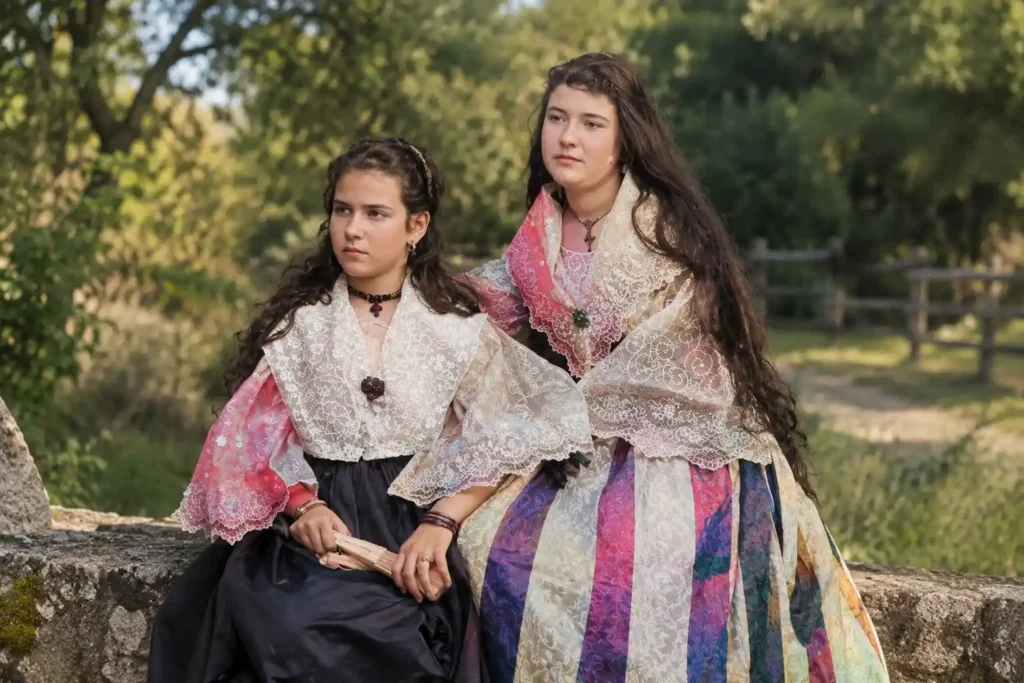
Bernadette San Pedro Bayot’s Story
Bernadette was the heart of the family. Bruno has often said she was his biggest supporter and the reason he believed in himself. She sang in the family shows and taught her children how to harmonize.
She died suddenly in 2013 from a brain aneurysm at just 55 years old. Bruno has spoken openly about how deeply her loss affected him. Many fans still point to his emotional live performances from that period as tributes to her.
Spanish Ancestry From Segovia
Bernadette’s family was Filipino with Spanish roots, a common mix given the Philippines’ long Spanish colonial history. Her father, Romeo “Eugene” Bayot, carried Spanish ancestry that genealogists have traced to the province of Segovia in Spain, including towns like Fuentepelayo and Nava de la Asunción.
Some researchers have also mentioned a possible Chinese ancestor on this side, which would not be unusual for Filipino families. However, that detail remains less documented than the Spanish line.
How He Got the Name “Bruno Mars”
The name “Bruno” came from his father. When Peter Gene was about two years old, his dad nicknamed him after Bruno Sammartino, a famous professional wrestler. The chubby toddler reportedly had a similar tough, sturdy look, and the nickname stuck.
“Mars” came much later. Bruno has explained that he added it because he felt he lacked a flashy, larger-than-life persona, and he joked that people said he seemed out of this world. The result was a stage name with no clear ethnic signal.
That choice matters for this topic. “Bruno Mars” could belong to anyone from anywhere. It lets listeners focus on the music instead of guessing his background from a surname.
Growing Up in a Musical Family in Hawaii
Bruno grew up in Honolulu in a household where everyone performed. His parents ran The Love Notes, a doo-wop and oldies revue in Waikiki, with Bruno’s uncle and siblings also taking part.
The Youngest Elvis Impersonator
At just four years old, Bruno joined the family show as a young Elvis impersonator. Tourists loved him. Local press even called him one of the world’s youngest working Elvis impersonators.
In 1992, he appeared briefly as “Little Elvis” in the film Honeymoon in Vegas. More important than the cameo was the training. Those shows taught him how to read a crowd, command a stage, and switch styles between Motown, doo-wop, and rock and roll.
In my view, this childhood apprenticeship is the most underrated part of his story. Most pop stars learn stagecraft in their twenties. Bruno learned it before he could read.
Hawaii as a Cultural Melting Pot
Hawaii shaped his identity as much as his bloodline did. The islands blend Native Hawaiian, Asian, Hispanic, and mainland American cultures, and in the ’80s and ’90s local radio mixed reggae, R&B, hip-hop, and island music freely.
Hawaii even has its own style called Jawaiian, a blend of reggae and Hawaiian music. Artists like Israel Kamakawiwo’ole were local heroes. You can hear that relaxed island reggae feel in songs like “The Lazy Song.”
Growing up where mixed families were normal gave Bruno a flexible sense of identity. In Hawaii, being “a little bit of everything” was not strange. It was just local.
How His Heritage Shapes His Music
Bruno’s sound is often called a genre blend, but it is also a family blend. Each side of his heritage left clear fingerprints on his music.
Puerto Rican Rhythm
His father’s Latin percussion is the rhythmic foundation of much of his work. Styles like salsa, bomba, and plena depend on hand percussion and tight grooves, and Bruno’s songs often carry that same drive.
Listen closely to the percussion layers in tracks like “Locked Out of Heaven” or the funk grooves on 24K Magic. The conga and timbale influence is there, even when the song is labeled pop or R&B. Many of these Puerto Rican rhythms also trace back to African roots, which adds another layer to his sound.
Filipino Showmanship and Harmony
From his mother’s side came harmony singing and a love of performance. Filipino families are known for karaoke, group singing, and polished showmanship, and Bruno grew up with all three.
His siblings carried on this family-band tradition too. His brother Eric Hernandez plays drums in Bruno’s band, The Hooligans. His sisters Tiara, Jaime, and Tahiti formed the singing group The Lylas.
Bruno’s agile vocals, sharp choreography, and easy falsetto reflect that upbringing. Many Filipino Americans take real pride in his mainstream success, and he is often celebrated as one of the most successful artists of Filipino descent.
Living in the “Gray Zone”: Being Mixed Race in the Music Industry
Bruno’s mixed features and ethnically ambiguous look created real obstacles early on. Record executives did not know which box to put him in.
Why Labels Didn’t Know How to Market Him
In an interview with Latina magazine, Bruno described how some executives suggested he lean into Latin music because of his Spanish surname, Hernandez. He did not want to be limited to one genre just because of his name.
He has also described feeling like he was not “Black enough” or “white enough” for certain lanes. The industry, at the time, marketed artists by clear racial categories. A mixed artist in a gray zone was seen as a risk, not an advantage.
His solution was the neutral stage name and a focus on universal pop. It worked. Instead of being marketed as Latino or Asian American, he was sold simply as a great entertainer, a shorthand that let him cross over to every audience.
The Cultural Appropriation Debate
In 2018, a clip from the web series The Grapevine sparked a heated debate on Twitter. Some critics argued that Bruno, as a non-Black artist, profited from Black musical traditions like funk and R&B.
Many Black musicians defended him. Legendary producers and singers such as Babyface, Jimmy Jam, and Terry Lewis praised his respect for the genre. Bruno himself has consistently credited Black artists as his inspiration, including in his Grammy speeches.
The debate raised fair questions about appreciation versus appropriation. Still, most industry voices agree that Bruno’s work reflects deep study and credit, not imitation.
Possible Taíno and African Roots
Because Bruno is part Puerto Rican, some fans speculate that he may carry Taíno (Indigenous Caribbean) and African ancestry. This is a reasonable guess, since many Puerto Ricans have European, African, and Taíno DNA in varying amounts.
However, there are no public documents or DNA results confirming this for Bruno specifically. It remains speculation, not fact.
The same goes for possible East Asian or Chinese ancestry on his Filipino side. Filipino families often have mixed roots, but without a confirmed test, it is best to treat these claims as possibilities.
Why People Keep Searching “What Race Is Bruno Mars?”
Bruno’s ethnicity is one of the most searched questions about him. Keyword tools estimate thousands of monthly searches for this topic alone.
| Search Query | Approximate Monthly Searches |
|---|---|
| Bruno Mars ethnicity | 15,000 |
| What race is Bruno Mars? | 10,000 |
| Bruno Mars nationality | 5,500 |
The reason is simple. His appearance does not match any one group, and his music draws from many genres. Fans hear funk, reggae, soul, and Latin percussion, then see his face, and they want to understand where it all comes from.
That curiosity is not always polite. Repeatedly asking someone “What are you?” can feel dehumanizing to mixed people. Bruno has mostly handled it with humor, but it shows how much the public still wants neat labels.
From Silk Sonic to “APT.”: Heritage in His Recent Work
In 2021, Bruno teamed up with Anderson .Paak to form the duo Silk Sonic. Their single “Leave the Door Open” was a smooth tribute to ’70s soul, and it won Record of the Year at the 2022 Grammys, part of a four-Grammy sweep that night.
In 2024, he partnered with Rosé of BLACKPINK on “APT.,” a global hit inspired by a Korean drinking game. The song’s catchy chant echoed the kind of group party games Filipino families often play, which made the collaboration feel natural.
These projects show the same pattern as his whole career. Bruno takes pieces from different cultures, blends them with care, and turns them into something that feels universal. His background works like source code, and his talent is the compiler.
Frequently Asked Questions
Is Bruno Mars Puerto Rican?
Yes, partly. Bruno Mars is about one-quarter Puerto Rican through his father, Peter Hernandez, whose father was from Puerto Rico. He is not fully Puerto Rican, since his father’s mother was Ashkenazi Jewish.
Is Bruno Mars Filipino?
Yes. His mother, Bernadette San Pedro Bayot, was born in Manila and was Filipino with Spanish ancestry. This makes Bruno roughly half Filipino and Spanish combined, and he is widely celebrated in the Filipino American community.
Is Bruno Mars Latino?
He is partly Latino through his Puerto Rican grandfather. However, calling him “half Puerto Rican, half Filipino” is an oversimplification, since he is also part Ashkenazi Jewish and Spanish. The music industry chose not to market him strictly as a Latino artist.
Is Bruno Mars Jewish?
He has Jewish ancestry but was not raised Jewish. His paternal grandmother came from an Ashkenazi Jewish family with roots in Hungary and Ukraine. Bruno was raised in the Catholic faith.
Is Bruno Mars Black?
No, Bruno Mars is not Black by known ancestry. His confirmed background is Puerto Rican, Ashkenazi Jewish, Filipino, and Spanish. His music, however, is heavily inspired by Black genres like funk, soul, and R&B, which he openly credits.
Where Did Bruno Mars Grow Up?
He grew up in Honolulu, Hawaii. He spent his childhood performing in his family’s Waikiki show, The Love Notes, before moving to Los Angeles in 2003 to start his professional music career.
Read About : reese witherspoon daughter
