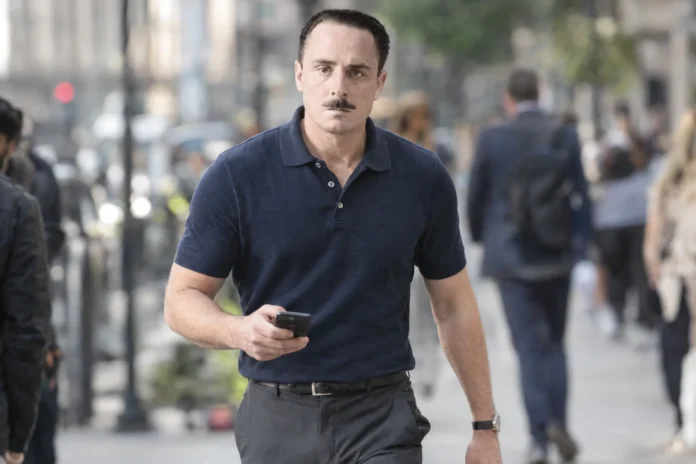
Oswald Mosley is one of the strangest figures in modern British history. He was a handsome aristocrat and war veteran, and at 22 he was the youngest MP in the Commons. Many people in the 1920s saw him as a future prime minister. Within a decade, he led the British Union of Fascists and his name had become a byword for extremism. Today, many people find him through Peaky Blinders, where Sam Claflin plays him as a smooth, menacing villain. The real story is darker, and in many ways more revealing, than the drama.
Biography Table
| Field | Details |
|---|---|
| Full Name | Sir Oswald Ernald Mosley, 6th Baronet |
| Nickname | “Tom” (to family and friends) |
| Date of Birth | 16 November 1896 |
| Place of Birth | Mayfair, Westminster, London, England |
| Date of Death | 3 December 1980 |
| Place of Death | Orsay, near Paris, France |
| Age at Death | 84 years |
| Nationality | British |
| Zodiac Sign | Scorpio |
| Profession/Occupation | Politician, soldier, aircraft observer/pilot, author |
| Years Active | 1918–1966 (political career) |
| Education | West Downs prep school, Winchester College, Royal Military College Sandhurst |
| Field | Politics (Conservative, Independent, Labour, New Party, BUF, Union Movement) |
| Spouse | Lady Cynthia Curzon (m. 1920; d. 1933); Diana Mitford Guinness (m. 1936) |
| Children | Vivien, Nicholas, Michael, Alexander, Max |
| Parents | Sir Oswald Mosley, 5th Baronet; Katharine Maud Edwards-Heathcote |
| Siblings | Two younger brothers, Edward and John |
| Notable Works | The Mosley Memorandum (1930), The Greater Britain (1932), My Life (1968) |
| Awards/Honors | 1914–15 Star, British War Medal, Victory Medal |
Who Was Oswald Mosley?
The short answer is that Sir Oswald Mosley was a British aristocrat and politician who founded the British Union of Fascists in 1932. He started out as a Conservative MP and later served as a Labour minister. From there he moved into fascism, and eventually into open antisemitism.
His career is unusual because very few politicians have sat for so many parties. Between 1918 and 1931 he was a Conservative, an independent, a Labour member, and the founder of his own New Party. Each move was his reaction to what he saw as a failing political system.
Supporters described his charisma as magnetic. Some contemporaries called him the best orator in England, and he often spoke without notes. That talent is exactly why his turn to fascism alarmed the ruling class. He was no fringe crank. He was a man who had once been close to the top of mainstream politics.
After years of reading about interwar Britain, I think Mosley is best understood as a warning about impatience. He had real ideas about unemployment. When Parliament did not act on them fast enough, he gave up on democracy altogether.
Early Life, Family Background and Education
Mosley was born on 16 November 1896 into a wealthy Staffordshire family. The family’s roots in the area went back centuries, and the Mosley baronetcy was created in 1781. Their seat was Rolleston Hall, a large house that was later demolished. The family’s fortune gave him financial independence throughout his life.
He was the eldest of three sons of Sir Oswald Mosley, 5th Baronet, and Katharine Maud Edwards-Heathcote. His father’s infidelities drove the couple apart, and they obtained a judicial separation when Oswald was about five. His mother raised him, first at Betton Hall near Market Drayton in Shropshire and later at Apedale Hall. His paternal grandfather was also a major influence.
At age nine he went to West Downs prep school, and he later moved on to Winchester College. He was academically weak and felt friendless there. His real talent was fencing. He won the public schools fencing championship in both foil and sabre, and he also boxed.
At 17 he left Winchester and entered the Royal Military College, Sandhurst, in January 1914. The stay was short. After a violent row with fellow cadets, he was expelled. This was an early sign of the temper and pride that would shape his whole career.
He inherited the baronetcy in 1928, when his father died, and became Sir Oswald Mosley, 6th Baronet. By then he was already a well-known political figure.
First World War Service
When the First World War began, Mosley was commissioned into the 16th Queen’s Lancers, a fashionable cavalry regiment. He soon found cavalry life too slow and volunteered for the Royal Flying Corps as an observer.
He flew over the Western Front, including during the period around the Battle of Loos. While training as a pilot at Shoreham, he crashed while showing off in front of his mother and broke his right ankle. Before it had healed properly, he returned to the trenches with his regiment.
The injury got worse in the wet trenches. In 1916 he was invalided out and left with a permanent limp for the rest of his life. For the remainder of the war he held desk jobs at the Ministry of Munitions and the Foreign Office.
He received the 1914–15 Star, the British War Medal, and the Victory Medal. More importantly, the war gave him a mission. He came away committed to preventing another war, and that belief shaped his early career and, later, his anti-war stance in 1939.
From Conservative MP to Labour Minister
Mosley’s parliamentary career moved fast and was never stable. In twelve years he went from youngest MP to Cabinet-level office. The subsections below cover his two biggest shifts.
Harrow and the Irish Question
In the December 1918 election Mosley won Harrow as a Conservative, with a majority of nearly 11,000. He was 22 and the youngest member of the Commons. His maiden speech and confident debating quickly made him a rising star.
The break came over Ireland. During the Irish War of Independence, he was outraged by the Black and Tan reprisals against civilians. In late 1920 he crossed the floor and sat as an independent MP. He also backed the Peace with Ireland Council.
Harrow voters stood by him. He kept the seat as an independent in 1922 and again in 1923, though his majority fell each time. Beatrice Webb, a leading Fabian, called him one of the most brilliant men in the House. It was high praise from the left for a Tory rebel.
Labour, Smethwick and the Mosley Memorandum
In 1924 Mosley joined Labour. Critics called him a “champagne socialist,” an aristocratic recruit dressed in socialist clothes. That year he challenged Neville Chamberlain in Birmingham Ladywood and lost by just 77 votes after recounts.
After a tour of India in the winter of 1924–25, where he met Gandhi, he returned to Parliament through the Smethwick by-election in December 1926. He won a majority of more than 6,500. His “Birmingham Proposals” on raising wages and expanding credit drew heavily on Keynes.
When Labour won in 1929, Ramsay MacDonald made him Chancellor of the Duchy of Lancaster and tasked him with tackling unemployment. His answer was the Mosley Memorandum. It called for public works, earlier pensions, a higher school-leaving age, and state control of credit.
Philip Snowden and the Cabinet rejected it. Mosley resigned in May 1930, and Labour MPs voted his proposals down by 210 to 29. Many later thinkers, including Richard Crossman, felt the memorandum was a generation ahead of Labour thinking. His arrogance and impatience, however, cost him allies.
| Year | Event |
|---|---|
| 1918 | Elected Conservative MP for Harrow, aged 22 |
| 1920 | Crosses the floor over Ireland; sits as independent |
| 1924 | Joins Labour; loses Ladywood by 77 votes |
| 1926 | Wins Smethwick by-election |
| 1929 | Becomes Chancellor of the Duchy of Lancaster |
| 1930 | Mosley Memorandum rejected; resigns |
| 1931 | Founds the New Party |
| 1932 | Founds the British Union of Fascists |
The New Party and the Drift to Fascism
In February 1931 Mosley launched the New Party. Donors included the car maker William Morris (Lord Nuffield), who gave £50,000. Early backers included John Strachey, Cyril Joad, and several Labour MPs. Figures such as Harold Macmillan showed some sympathy.
The party got off to a poor start. At the Ashton-under-Lyne by-election, its candidate Allan Young took 4,472 votes. That split the left vote and handed the seat to the Conservatives. Hostile crowds followed, and Mosley began organising a trained, disciplined force of stewards.
That stewarding group was an early sign of where things were going. Strachey and Joad left, warning of a drift to fascism. In the 1931 election the New Party ran 24 candidates and won no seats. Mosley lost his own contest in Stoke.
In early 1932 he visited Mussolini in Rome and came home convinced that fascism was the answer to the Depression. He dissolved the New Party in April 1932, and most of its youth wing was absorbed into what came next.
The British Union of Fascists and the Blackshirts
On 1 October 1932 Mosley founded the British Union of Fascists (BUF). It began with only 32 members. He promised a “Corporate State” in which parties would be abolished, strikes banned, and employers, unions and consumers organised under a single-party state.
The BUF copied Italian models first: black uniforms, the stiff-armed salute, and huge rallies. Members became known as the Blackshirts. Press estimates put membership at around 50,000 at its peak in 1934, though it fell to far fewer after that.
Supporters included military theorist J. F. C. Fuller, writer Henry Williamson, and William Joyce, later infamous as “Lord Haw-Haw.” Membership surged and dropped with the violence associated with the movement.
Lord Rothermere and the Daily Mail
Press support boosted the BUF early on. On 22 January 1934 the Daily Mail, owned by Lord Rothermere, ran an article headlined “Hurrah for the Blackshirts.” The Daily Mirror also carried favourable coverage for a time.
The alliance did not last. Advertisers grew uneasy after the violence at Olympia, and Rothermere withdrew his support in July 1934. The cartoonist David Low had been satirising the relationship all along. Once Rothermere left, the BUF lost its most powerful mainstream voice.
The Olympia Rally (June 1934)
On 7 June 1934 Mosley held a huge rally at Olympia in London. Communists and other opponents had bought tickets to heckle. Stewards dragged hecklers out and beat them in full view of journalists and guests.
Conservative MPs who attended, including Geoffrey Lloyd and William Anstruther-Gray, condemned the stewards’ conduct. Weeks later, Hitler’s Night of the Long Knives made fascism look even more dangerous. Many historians see Olympia as the beginning of the end for the BUF’s respectability.
The Battle of Cable Street (1936)
On 4 October 1936 the BUF planned to march through the East End, a heavily Jewish area. A petition with about 100,000 signatures had asked the government to ban it. The Home Secretary refused, and a large police escort was sent.
Tens of thousands of local residents, Jewish groups, communists, socialists, and dockers barricaded the route along Cable Street. Protesters fought the police who were trying to clear the way. Police chief Sir Philip Game eventually told Mosley to call the march off.
The government’s answer was the Public Order Act 1936, which came into force on 1 January 1937. It banned political uniforms and required police permission for large demonstrations. Even so, the BUF won nearly a quarter of the vote in some East End wards in the 1937 London County Council elections.
Was Oswald Mosley a Nazi?
Strictly speaking, no. Oswald Mosley was never a member of the German Nazi Party. He was a British fascist, and in the beginning he modelled his movement on Mussolini’s Italy rather than Hitler’s Germany.
That distinction matters less over time. From 1934 the BUF grew openly antisemitic. Mosley blamed “Jewish interests” for pushing Britain toward war with Germany. In 1936 the movement was renamed the British Union of Fascists and National Socialists, which borrowed directly from German models.
Antisemitic violence followed. In the East End, BUF speakers targeted Jewish residents, and there were serious clashes in Leicester, Liverpool, and other cities. At one point Mosley was knocked unconscious by a stone thrown during a Liverpool rally in October 1937.
So the honest answer is layered. He was not a card-carrying Nazi, but his ideology, rhetoric, and alliances moved steadily toward National Socialism in the late 1930s.
Oswald Mosley and Hitler
Mosley met Hitler personally. When he married Diana Guinness in 1936, the ceremony took place at the Berlin home of Joseph Goebbels, and Hitler was a guest.
In the late 1930s Mosley also tried to fund the BUF through a private commercial radio station that would broadcast to Britain. That needed Hitler’s permission, and Diana handled much of the negotiation. The deal never went into operation, but it showed how close the Mosleys had become to the Nazi leadership.
Marriages, Affairs and Children
On 11 May 1920 Mosley married Lady Cynthia Curzon, the daughter of Lord Curzon, at the Chapel Royal. King George V, Queen Mary, and the Belgian royals attended. It was one of the society weddings of the year.
His private life was far from settled. He had many affairs, including with Cynthia’s younger sister Alexandra (“Baba”) Metcalfe, her older sister Irene, and their stepmother Grace. Cynthia died of peritonitis after an appendix operation on 16 May 1933. She was 34.
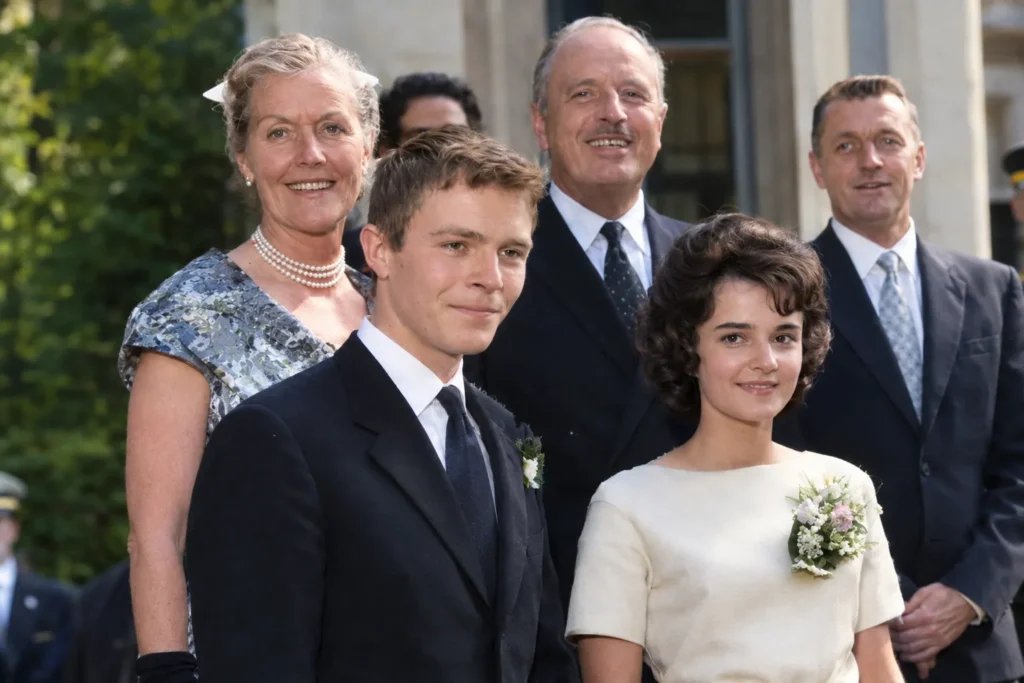
Mosley’s second wife was Diana Guinness, one of the famous Mitford sisters and daughter of the 2nd Baron Redesdale. Her sister Unity was a devoted Hitler follower. Diana and Mosley married secretly in Berlin on 6 October 1936, and the wedding was kept hidden for two years.
He had five children in all.
- With Cynthia: Vivien (born 1921), Nicholas (born 1923), and Michael (born 1932).
- With Diana: Alexander (born 1938) and Max (born 1940).
Nicholas became a novelist and later wrote about his father with an unsparing eye. Max Mosley became president of motor sport’s governing body, the FIA.
Internment During the Second World War
What happened to Oswald Mosley when war came? On 23 May 1940 he was arrested and interned under Defence Regulation 18B. The authorities saw him as a security threat. Before that, he had been campaigning for a negotiated peace with Germany.
His last big pre-war event was the 1939 “Britain First” rally at Earls Court. It was billed as the biggest indoor political rally in British history. Months later the BUF was banned and many of its leaders were detained.
Diana was arrested soon after the birth of their son Max. Both spent time in Holloway Prison, where Churchill later allowed them to live together. Mosley’s MI5 files, now public, show how closely he was watched.
In November 1943 he was released on health grounds, as he was suffering from phlebitis. His release caused public anger, but he remained under house arrest for the rest of the war.
Post-War Politics and Exile
Mosley tried to come back after the war. In 1948 he founded the Union Movement, built around the idea of “Europe a Nation,” a common European government. It was an early and distorted take on European unity.
The Union Movement also took a racist turn. After the 1958 Notting Hill riots, Mosley ran in Kensington North in 1959 on an anti-immigration platform aimed at Caribbean immigrants. He won just 8.1% of the vote. In 1966 in Shoreditch and Finsbury he won only 4.6%.
He also became one of the earliest champions of Holocaust denial. He claimed Hitler knew nothing of the killings and blamed deaths in the camps on typhus and Allied bombing. Historians have rejected these claims completely.
He moved to Ireland in 1951 and later settled at the Temple de la Gloire in Orsay, France. He lived in self-imposed exile from there. For years the BBC effectively banned him from the airwaves, and he remained a discredited figure on the margins of politics.
How Did Oswald Mosley Die?
Oswald Mosley died in his sleep on 3 December 1980 at his home in Orsay, near Paris. He was 84. He had been suffering from Parkinson’s disease in his final years.
His funeral was low-key. He was cremated at Père Lachaise in Paris, and his ashes were scattered on the pond at Orsay. A few European far-right figures, including Italy’s Giorgio Almirante and Germany’s Adolf von Thadden, sent condolences.
In his last years he still received journalists and old admirers, and he took a close interest in how history would judge him. His papers are now held at the University of Birmingham, where researchers still study them.
Oswald Mosley Books
Mosley wrote several books that set out his ideas and defended his record. There is also a strong body of biography and history about him.
| Title | Author | Year | What It Covers |
|---|---|---|---|
| The Greater Britain | Oswald Mosley | 1932 | BUF manifesto and the Corporate State |
| My Life | Oswald Mosley | 1968 | His autobiography and self-defence |
| Oswald Mosley | Robert Skidelsky | 1975 | A detailed, balanced political biography |
| Rules of the Game / Beyond the Pale | Nicholas Mosley | 1982–83 | A son’s critical memoir of his father |
| Blackshirt | Stephen Dorril | 2006 | A deep, heavily researched account of his fascist years |
If you are new to the subject, start with Skidelsky for the politics and then read Nicholas Mosley for the man. Reading the two together gives you the most honest picture. My Life is worth reading too, but mainly as an example of how Mosley wanted to be remembered.
Oswald Mosley in Peaky Blinders
For many readers, the first encounter with Oswald Mosley comes through Peaky Blinders. He appears in series 5 and 6 as a political rival and dangerous ally to Tommy Shelby, who is now an MP.
The show places him in Birmingham, which fits history, since Smethwick and Ladywood were real parts of his career. It also takes big liberties with events, timelines, and his relationships, all for the sake of drama.
Oswald Mosley Peaky Blinders Actor
The Oswald Mosley actor in Peaky Blinders is Sam Claflin. He plays Mosley as cold, charming, and quietly threatening. Claflin captures the real man’s oratory and aristocratic confidence well, especially in the rally scenes.
Viewers often say the performance made them look up the real history, and that tends to be a good thing. The show makes clear that Mosley was a villain, but it can’t cover the full scale of his antisemitism in a few episodes.
Does Oswald Mosley Die in Peaky Blinders?
No, Oswald Mosley does not die in Peaky Blinders. At the end of series 5, Tommy’s plan to assassinate him at a rally fails, and Mosley survives. He is still part of the story in series 6.
This matches real life. The real Mosley was never assassinated. He outlived most of his rivals and died of natural causes in 1980.
Other Portrayals in Popular Culture
Peaky Blinders is only the latest in a long line of portrayals. Mosley’s mix of glamour and menace has attracted writers and filmmakers for decades.
| Work | Type | Portrayal |
|---|---|---|
| Jeeves stories (P. G. Wodehouse) | Fiction | Parodied as Roderick Spode, leader of the “Black Shorts” |
| Mosley (1998) | TV miniseries | Played by Jonathan Cake |
| Peaky Blinders (series 5–6) | TV drama | Played by Sam Claflin |
| Outrageous (2025) | TV drama | Played by Joshua Sasse |
| “Less Than Zero” | Song by Elvis Costello | Written about Mosley |
| Dominion (C. J. Sansom) | Alternate-history novel | Mosley in a Nazi-dominated Britain |
Wodehouse’s Roderick Spode is probably the most lasting mockery. By turning Mosley into a pompous figure in shorts, Wodehouse deflated him in a way that political attacks never did.
Alternate-history novels often imagine what Britain would have looked like if Mosley had held real power. In those stories, he tends to appear as a puppet prime minister under German occupation.
Legacy and Historical Assessment
Mosley’s legacy is mostly a warning. In 2006, BBC History magazine readers named him the worst Briton of the 20th century. Few figures in modern British history are remembered with such lasting hostility.
Many observers still point to the waste of his immense talent. The Labour veteran Lord Shinwell said Mosley could have been a great Labour leader. His economic thinking in 1930 was sound, but his poor judgement, vanity, and authoritarian beliefs destroyed it.
His influence also reached unexpected places. Jorian Jenks, the BUF’s agricultural adviser, later helped shape the early organic farming movement and the Soil Association. It is an uncomfortable link that historians still study.
His story shows how quickly a gifted, popular public figure can slide from mainstream politics into extremism. That is why he still matters, far beyond the fame of Peaky Blinders.
FAQs
Who is Oswald Mosley?
Sir Oswald Mosley (1896–1980) was a British politician who founded the British Union of Fascists in 1932. Before that he served as a Conservative MP, an independent, and a Labour minister. He is remembered as Britain’s most notorious fascist.
What happened to Oswald Mosley after the war?
After his wartime internment, he founded the Union Movement in 1948 but won very few votes. He left Britain for Ireland in 1951 and later settled in France. He spent his final decades on the fringes of politics.
Did Oswald Mosley ever meet Hitler?
Yes. Oswald Mosley and Hitler met in person, and Hitler attended Mosley’s secret 1936 wedding to Diana Guinness in Berlin. Mosley also sought Hitler’s approval for a BUF-backed commercial radio station.
Is Peaky Blinders’ Oswald Mosley based on a real person?
Yes. The character is based on the real Sir Oswald Mosley, played by Sam Claflin. The show borrows his personality and politics but invents most of his dealings with Tommy Shelby.
Was Sir Oswald Mosley ever in prison?
Yes. He was interned under Regulation 18B from May 1940 to November 1943, partly in Holloway Prison. He was released because of ill health and remained under house arrest until the war ended.
Why was Oswald Mosley called a traitor?
Many Britons saw his pro-German stance, his campaign for peace with Hitler, and his closeness to Nazi leaders as betrayal. He was never tried for treason, but the label followed him for life.
Read About : how old is deion sanders
