
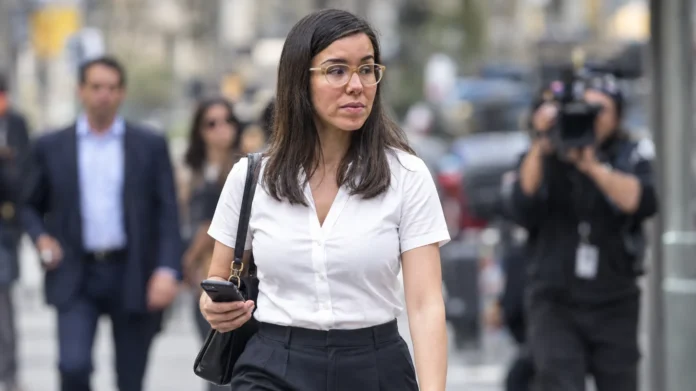
Jodi Arias now spends her days inside Arizona State Prison Complex–Perryville, more than a decade after one of the most-watched murder trials in American history. She is serving life without parole for the 2008 killing of her ex-boyfriend, Travis Alexander. In 2026 she is back in the headlines. She runs a Substack blog, sells artwork, claims evidence went missing, and is still trying to challenge her conviction. This guide covers where she is, how she got there, and what she is doing today.
| Field | Details |
|---|---|
| Full Name | Jodi Ann Arias |
| Date of Birth | July 9, 1980 |
| Place of Birth | Salinas, California, USA |
| Age | 46 years old (as of 2026) |
| Nationality | American |
| Zodiac Sign | Cancer |
| Religion | Baptized into the LDS (Mormon) Church in 2006 |
| Profession/Occupation | Former waitress and aspiring photographer; now an inmate who sells art |
| Education | High school dropout; later earned a GED |
| Parents | William Arias and Sandra Arias |
| Dating/Relationship Status | Never married |
| Hair Color | Brown |
| Notable Works | Prison artwork sold through her website; “Just Jodi” Substack blog |
| Social Media | Website and Twitter account run on her behalf |
Who Is Jodi Arias?
Jodi Arias is a California-born woman convicted of first-degree murder in Maricopa County, Arizona. Before the case, she lived a fairly ordinary life. She dropped out of high school, earned a GED, and worked a string of part-time jobs while she tried to build a career in photography.
She was born in Salinas on July 9, 1980, to William and Sandra Arias. Photography was her main passion. She hoped to become a professional photographer, and that hobby would later become central to her own trial, because a camera ended up supplying some of the strongest evidence against her.
By the time she met Travis Alexander, she was in her mid-twenties and living in California. She had no well-known criminal history, which is part of why the case caught so much attention. Many people struggled to connect the soft-spoken woman in court with the brutal killing described by prosecutors.
Jodi Arias and Travis Alexander’s Relationship
The two met in September 2006 at a work conference in Las Vegas. Arias was 26. Alexander was 29, an insurance salesman and motivational speaker from Mesa, Arizona. Friends said they stayed up talking that first night, and a relationship followed quickly.
Faith shaped the relationship from the start. Alexander was a devout Mormon, and Arias was baptized into the LDS Church soon after they met. The couple still had a sexual relationship, which went against their faith. Alexander reportedly felt guilt over premarital sex, and he told friends Arias was not “wife material.”
The romance lasted about five months as an official couple. They broke up in 2007, but the relationship stayed on-and-off. Arias moved to Mesa for a time, and the pair stayed in touch even after the breakup.
Alexander’s friends described the relationship as volatile and possessive. They said Arias made unannounced visits, and they suspected she was behind his slashed tires and a hacked Facebook account. Some described it as stalking. Alexander had started dating another woman by spring 2008, and he reportedly wanted distance from Arias.
The Murder and Investigation
Travis Alexander was killed in his Mesa home on June 4, 2008. His friends found his body in the shower on June 9 after they had not heard from him for days. A 911 call followed, and investigators quickly realized they were looking at a violent crime scene.
Alexander had been stabbed 27 times, his throat was cut ear to ear, and he had a gunshot wound to the head from a .25 caliber weapon. His home showed signs that someone had tried to clean up. Police found a camera in the washing machine, which turned out to be one of the most important pieces of evidence in the case.
The deleted photos on that camera were recovered. Timestamped images showed Alexander in the shower shortly before his death, along with images taken during the attack, including one from a dropped camera. Investigators also found a bloody handprint containing both Arias’s and Alexander’s blood, plus long brown hairs matching her DNA.
Detectives also learned that a gun was missing from her grandparents’ home after a reported burglary, and that the caliber matched the one used in the killing. She had also been driving to Utah around the time of the murder. Arias was indicted on first-degree murder charges on July 9, 2008, and arrested at a family home in California on July 15, 2008. She pleaded not guilty.
Jodi Arias’s Changing Stories
Arias did not tell one consistent story. She gave at least three versions of what happened, and those shifting accounts became a major part of the prosecution’s case.
| Version | What She Claimed |
|---|---|
| First | She denied any involvement and said she wasn’t there |
| Second | Two masked intruders broke in, killed Alexander, and spared her |
| Third | She killed him in self-defense after he attacked her |
The masked-intruder story came out in a TV interview after her arrest. In that same period, she famously claimed that no jury would convict her. Her mugshot smile and that confident line became symbols of the case in the media.
By 2010, she had admitted to killing Alexander but claimed self-defense. Her defense said she was a victim of domestic abuse and acted out of fear. Prosecutors argued the abuse story was invented and that the shifting accounts showed she was willing to lie whenever the evidence turned against her.
The Trial
The trial started on January 2, 2013, more than four years after the murder. Prosecutor Juan Martinez led the state’s case. Defense attorneys Kirk Nurmi and Jennifer Willmott represented Arias. The proceedings aired live, and daytime TV audiences followed every twist.
Arias testified for 18 consecutive days, which is extremely unusual for a defendant. She gave explicit testimony about her sexual relationship with Alexander. She also described alleged abuse and claimed memory loss about key moments of the attack.
Martinez’s aggressive questioning became famous. He confronted her with crime scene photos, journal entries, and a recorded phone call. He argued that she had spied on and stalked Alexander, and that her diary entries painted a far rosier picture of the relationship than her testimony did.
The defense called an expert who said Arias suffered from PTSD, which they argued explained her memory gaps. The prosecution’s witnesses disputed that view. After about five months of testimony, jurors deliberated for around 15 hours.
Conviction and Sentencing
On May 8, 2013, the jury found Arias guilty of first-degree murder. All 12 jurors agreed on the conviction. Some agreed it was premeditated murder, and others based it on felony murder, but the verdict was unanimous.
The penalty phase was a different story. The first jury deadlocked on whether she should get the death penalty, which led to a mistrial on punishment. Arizona law allowed prosecutors to try again with a second jury.
| Date | Event |
|---|---|
| May 8, 2013 | Guilty verdict for first-degree murder |
| May 2013 | First jury deadlocks on the death penalty |
| October 2014 | Penalty-phase retrial begins |
| March 2015 | Second jury deadlocks, 11 for death and one holdout |
| April 13, 2015 | Sentenced to life without parole |
The penalty retrial started in October 2014 and ended in March 2015 with another deadlock. Once two juries failed to agree, the death penalty was off the table. Her life was spared, but Judge Sherry Stephens sentenced her on April 13, 2015, to natural life with no chance of release.
At sentencing, Arias said she was disgusted with herself and expressed remorse. Alexander’s family spoke about their grief and the toll of two juries and years of hearings. The court later ordered her to pay about $32,000 in restitution to cover the family’s travel and trial attendance costs.
Appeals and Legal Battles
Arias appealed, arguing she never got a fair trial. Her appellate lawyer pointed to prosecutorial misconduct, the media circus, a dismissed juror, and errors in the trial transcript. In March 2020, the Arizona Court of Appeals upheld her conviction.
The ruling was notable. The court agreed that Juan Martinez had committed misconduct. It found he improperly questioned witnesses, courted the press, and leaked information. It even noted claims of sexual misconduct involving people connected to the case. Still, the judges ruled that the overwhelming evidence meant the cumulative misconduct did not change the outcome.
Her former defense attorney also became part of the story. Kirk Nurmi published a tell-all book in 2015 called Trapped With Ms. Arias. Arias argued it violated attorney-client privilege and sued her lead attorney, and his law license was later revoked.
Other moves, such as a bid for a new trial, were denied. Her legal team also argued the court record was not complete. The state’s highest court later declined to review her case, which closed off her main path through the state appeals system.
Where Is Jodi Arias Now?
Jodi Arias is currently at Arizona State Prison Complex–Perryville in Goodyear, Arizona, a women’s prison run by the Arizona Department of Corrections, Rehabilitation and Reentry (ADCRR). It sits less than an hour from Mesa, where the murder happened.
She is not eligible for release. Despite some online confusion, her sentence does not include parole after 25 years. It is natural life, meaning she is expected to remain behind bars for the rest of her life unless a court overturns her conviction.
How Her Custody Level Has Changed
Her time in custody has moved through several stages since her 2008 arrest.
| Period | Location | Custody Status |
|---|---|---|
| 2008–2015 | Estrella Jail, Phoenix | Held during trials |
| 2015 | ASPC–Perryville | Maximum security unit, about 23 hours a day in cell |
| Late 2010s | ASPC–Perryville | Stepped down to close custody |
| 2020s | ASPC–Perryville | Medium custody, with reports of medium-low classification |
Reports differ on exactly when each change happened, so treat the dates as approximate. The general direction, though, is clear. She has moved from the most restricted unit to a lower custody class with more movement and job access.
Jodi Arias’s Life Behind Bars
Arias’s daily life today looks very different from her first years in prison. In the maximum-security yard, she was locked down most of the day. With lower custody, she has been able to hold prison jobs and spend more time outside her cell.
Over the years, she has reportedly worked as a library aide, a porter, and in the prison’s store warehouse. These jobs pay very little, but they give inmates structure and a reason to leave their cells. Reports about which job she held and when don’t always match.
Her inmate file includes disciplinary issues. One infraction involved disrespect to staff. Other inmates and former Perryville inmate Sue Ellen Allen have described her as someone who drew a lot of attention. Some reports claimed she flirted with guards or received special treatment, though these accounts come from secondhand sources.
She has also faced threats to her life from other inmates, which is common for high-profile prisoners. Her father, William, offered support for years. Prison food, phone calls, and limited visits make up much of her routine, as they do for most long-term inmates.
Jodi Arias’s Cellmates: Tracy Brown and Donavan Bering
Two former cellmates from her Estrella Jail days became minor celebrities in their own right. Both spoke publicly about life with Arias and helped shape her public image.
- Tracy Brown roomed with Arias at Estrella Jail and later appeared on shows like Nancy Grace. She described Arias as calculated and said she showed no remorse.
- Donavan Bering was a young inmate who formed a close friendship with Arias. She got several tattoos linked to their bond, including a songbird and other symbols.
Bering’s story inspired the Lifetime film Bad Behind Bars: Jodi Arias (2016). Bering later said Arias manipulated her and that their friendship cost her dearly. The documentary Jodi Arias: Cellmate Secrets also explored these relationships and the perks Arias allegedly enjoyed because of her fame.
Jodi Arias in 2026: Blog, Evidence Claims and New Legal Plans
2026 has been one of Arias’s most active years in public since her sentencing. She has launched a blog, announced new legal plans, and expanded her art sales. Each move has drawn both admirers and haters online.
The “Just Jodi” Blog and Lost Evidence Claims
In January 2026, Arias started a Substack blog called “Just Jodi,” opening with a post titled “Hello 2026.” She uses it to speak directly to the public, something she could only do through reporters and TV specials before.
Her biggest claim is that exculpatory evidence in her case was lost or destroyed. She argues this evidence could have supported a lesser charge, such as second-degree murder or manslaughter. Prosecutors and legal analysts have said her chances of a new trial on that basis are slim to none.
She has also written about Juror #17, the lone holdout on the 2015 penalty-retrial jury who blocked the death penalty. That juror faced death threats after the verdict. Retired detective Steve Flores, who led the investigation, has defended the original case. Juan Martinez declined to comment on her posts.
Her Many Lawyers and Habeas Corpus Plans
In July 2026, Arias revealed she has gone through around 18 lawyers over the years. She has said some of them betrayed her, and that advisers she confided in let her down.
Her post-conviction relief (PCR) petition in state court has stalled for roughly five years. She now says she wants to hire new attorneys to file a federal habeas corpus petition. This is a challenge to her conviction in federal court, usually the last legal road available after state options run out.
From what I’ve seen following cases like this, federal habeas petitions rarely succeed, especially when an appeals court has already called the evidence overwhelming. Still, the filing could keep her case in the news for years.
Selling Artwork From Prison
Arias sells her artwork through JodiArias.com, with updates also shared on a Twitter account. Selling art from prison is not illegal in Arizona, as long as the profits don’t come from telling the story of the crime.
On June 30, 2026, she released Americana-themed pieces for America’s 250th anniversary. One was an 11×14 drawing featuring an American flag and fireworks. Some of her artwork sells for hundreds or even thousands of dollars, and she has said the money helps fund her appeal.
The Arizona corrections department has faced questions about the art venture over the years. Critics say it lets a convicted murderer profit from notoriety. Supporters argue she has a right to create and sell art like any other inmate.
Claims of Government “Attempts to Kill” Her
Arias has also posted about what she calls government “attempts to kill” her, a reference to the two death penalty bids. She framed this in a patriotic post tied to the 250th anniversary, which many readers found jarring given the crime she committed.
Does Jodi Arias Have a Boyfriend?
Arias has never married. Over the years, she has received letters from admirers, which is common for notorious women in prison.
In 2019, reports linked her to a man named Benjamin Ernst, who was said to be on her visitation list. There was speculation about marriage, but nothing was ever confirmed. Her current relationship status is unknown, and she has not discussed a partner on her blog.
Mental Health Diagnosis Speculation
No clinical diagnosis has been made public, and she never used an insanity plea. Much of what circulates online comes from TV pundits rather than doctors who treated her.
During the trial and after, commentators such as psychiatrist Dr. Dale Archer suggested borderline personality disorder (BPD) traits. Others pointed to narcissism, antisocial traits, or even sociopathy, often citing her apparent lack of remorse. The defense, by contrast, framed her as a battered woman suffering from PTSD.
It’s worth reading these claims with caution. Diagnosing someone from TV footage is not a clinical assessment. What is clear is that her mental health became another battlefield where both sides tried to explain why she did what she did.
Documentaries and Movies About Jodi Arias
Few true crime cases have produced as many films, books, and TV specials. Here are the best-known titles.
| Title | Type | Notes |
|---|---|---|
| Jodi Arias: Dirty Little Secret | Lifetime film | Dramatized the relationship and murder |
| Bad Behind Bars: Jodi Arias | Lifetime film | Focused on cellmate Donavan Bering |
| Jodi Arias: Cellmate Secrets | Documentary | Interviews with former cellmates |
| Dateline: Secrets Uncovered (S7E24) | TV episode | Covered the case and trial |
| Snapped: The Case Continues | TV series | Follow-up on the case |
| Jodi Arias: An American Murder Mystery | Docuseries | Investigation-focused retelling |
| Jodi Arias: In Defense Of | Documentary | Looked at the defense side |
| If I Can’t Have You: The Jodi Arias Story | Documentary | Released around the 10-year anniversary |
| Along Came Jodi | Docuseries | Explored the relationship and aftermath |
| Obsessed: Unraveling Jodi Arias | Documentary | Recent look at the case and its legacy |
Podcasts, books, and online speculation continue to fuel interest. The 2013 trial helped shape the modern true crime boom, and new content still appears every few years.
FAQs
Is Jodi Arias still in prison in 2026?
Yes. Jodi Arias is still in prison at ASPC–Perryville in Goodyear, Arizona. She is serving a natural life sentence and is not eligible for release.
Will Jodi Arias ever get parole?
No. Her sentence is life without parole, despite some reports claiming parole after 25 years. Her only path out would be a successful court challenge to her conviction, which legal experts consider very unlikely.
How old is Jodi Arias now?
Jodi Arias is 46 years old, born on July 9, 1980. She was 27 when Travis Alexander was killed and has now spent more than 18 years in custody.
Why did Jodi Arias not get the death penalty?
Two separate juries could not unanimously agree on a death sentence. After the second jury deadlocked in March 2015, Arizona law required the judge to choose between life sentences, and she chose natural life.
Does Jodi Arias make money from her art?
Yes, she sells art through her website. She says the profits help pay for her legal fight. Arizona law allows inmates to sell art as long as they don’t profit from telling the story of their crime.
What is Jodi Arias’s Substack blog about?
Her “Just Jodi” blog, launched in January 2026, shares her views on her case, claims of lost evidence, and her legal plans. It also includes personal posts and updates about her art and life in prison.
Read About : kardashian sisters
