
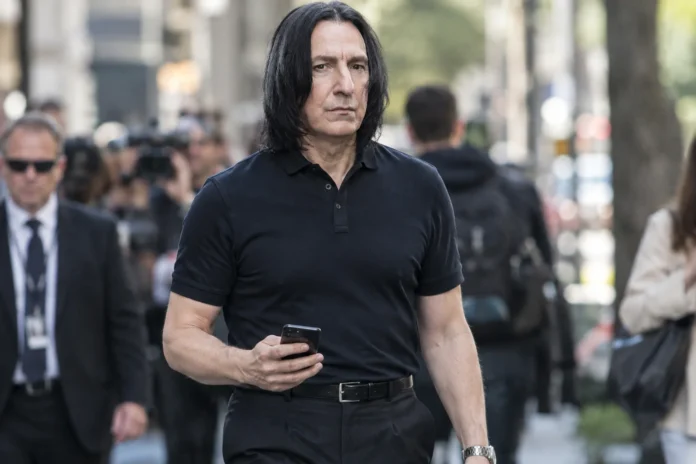
Few twists in the Harry Potter saga hit harder than the moment Severus Snape, Dumbledore’s killer in the eyes of the wizarding world, took charge of Hogwarts. Snape as headmaster is a story about duress, secret loyalty and a second chance at protecting the students he seemed to despise. Having reread Deathly Hallows more times than I can count, I still find new clues in how Rowling hid the truth in plain sight. This guide covers how he got the post, what his tenure really looked like, how it ended, who replaced Snape as headmaster, and how HBO’s reboot plans to bring the character back.
Severus Snape Biography
| Field | Details |
|---|---|
| Full Name | Severus Snape |
| Nickname | The Half-Blood Prince |
| Date of Birth | 9 January 1960 |
| Date of Death | 2 May 1998 (Shrieking Shack) |
| Age | 38 at the time of death |
| Nationality | British |
| Zodiac Sign | Capricorn |
| Profession/Occupation | Potions Master, Defence Against the Dark Arts professor, Head of Slytherin, Hogwarts Headmaster, double agent |
| Years Active | 1981–1998 (Hogwarts staff) |
| Education | Hogwarts School of Witchcraft and Wizardry (Slytherin House) |
| Genre/Field | Potions, Dark Arts, Occlumency |
| Spouse/Partner | Never married |
| Children | None |
| Parents | Tobias Snape (father), Eileen Prince (mother) |
| Eye Color | Black |
| Hair Color | Black |
| Notable Works | Half-Blood Prince potion annotations, the Sectumsempra spell, Wolfsbane Potion brewing |
| Portrayed By | Alan Rickman (films), Paapa Essiedu (HBO series) |
How Snape Became Headmaster of Hogwarts
Snape became headmaster because Voldemort wanted his most trusted right-hand man running the school. After Dumbledore’s death in June 1997, the castle had no permanent leader. Once the Ministry fell in August 1997, Voldemort controlled every appointment, and Snape was the obvious candidate in his eyes.
The takeover was quiet on paper. Pius Thicknesse sat in the Minister for Magic’s chair, but he was under the Imperius Curse. That meant the Ministry could rubber-stamp Snape’s appointment without any real opposition from the governors or the public, who were too frightened to object.
From Voldemort’s point of view, the choice made perfect sense. Snape had killed Dumbledore in front of witnesses, had years of experience inside the castle, and had served as Potions master and Defence Against the Dark Arts teacher. He knew every teacher, every corridor and every weakness of the school.
The news reached Harry through the Daily Prophet in DH Chapter 12, “Magic is Might.” The headline confirmed Snape as the new headmaster and listed the other staff changes. For Harry, hiding at Grimmauld Place, it felt like the final insult: the man he blamed for Dumbledore’s death now sat in Dumbledore’s office.
The Staff Changes That Came With Him
Snape did not arrive alone. The same report announced two Death Eaters joining the teaching staff, which showed readers exactly who was really pulling the strings at Hogwarts.
| Post | Appointed Teacher | Previous Holder |
|---|---|---|
| Headmaster | Severus Snape | Albus Dumbledore |
| Defence Against the Dark Arts | Amycus Carrow | Severus Snape |
| Muggle Studies | Alecto Carrow | Charity Burbage (murdered by Voldemort) |
| Potions | Horace Slughorn (retained) | — |
Muggle Studies became compulsory under Alecto, turning a harmless subject into propaganda. Defence Against the Dark Arts under Amycus simply became the Dark Arts. These changes told every reader that “Magic is Might” was now school policy.
When Was Snape’s Appointment Announced?
The books never print an exact date, so any answer is inferred from canon rather than stated with certainty. The most common reading places the report around 1 September 1997, the first day of the new school year, when students were already on the train.
That timeline fits the story’s logic. The Ministry fell in early August, giving Voldemort roughly a month to arrange the takeover. Announcing the new headmaster as term began would have left families with little room to pull children out of school.
Snape’s Tenure as Headmaster (Secretly Loyal to Dumbledore)
On the surface, Snape’s regime looked like a dictatorship. The Carrow siblings handed out cruel punishments, students were tortured in detention, and many families feared for their children. Underneath, though, Snape was following Dumbledore’s orders the whole time.
Dumbledore’s enchanted portrait hung in the headmaster’s office, and the two of them kept working together. The portrait guided Snape’s choices, including the plan to get the Sword of Gryffindor to Harry. Snape sent it to the Forest of Dean using his doe Patronus, the same form Lily’s Patronus took.
His protection of students was subtle but real. When Ginny, Neville and Luna tried to steal the sword from his office, he could have handed them to the Carrows. Instead he sent them to detention with Hagrid in the Forbidden Forest, a punishment that was barely a punishment at all.
Snape had to walk a dangerous line. If he looked too soft, Voldemort would replace him with someone far worse. So he let the Carrows hold the deputy positions and run discipline, while he quietly steered the worst situations away from serious harm. It was a role played entirely under duress.
What strikes me most on rereading is how lonely that year must have been. The Hogwarts staff hated him, the students feared him, and the only person who knew the truth was a painting on the wall.
How Snape’s Headship Ended
Snape’s time in charge ended on the night of 1–2 May 1998, just before the Battle of Hogwarts. In Deathly Hallows Chapter 30, “The Sacking of Severus Snape,” McGonagall caught him in a corridor while an invisible Harry watched. The confrontation turned into a fight almost immediately.
McGonagall, soon joined by Flitwick and Sprout, drove him back. Snape barely fought back properly; he mostly defended himself and deflected spells. Rereading it now, his restraint is obvious. He never tried to hurt them seriously, which makes sense for a man secretly on their side.
Snape escaped by leaping through a window and flying into the night. In that moment he abandoned the post, and McGonagall effectively took control of the school to prepare for battle. Nobody from the Board of Governors or the Ministry formally removed him; the staff simply drove him out.
His story ended soon after in the Shrieking Shack, where Voldemort ordered Nagini to kill him. Before dying, Snape gave Harry the memories that revealed his loyalty, his love for Lily, and his years of duty to Dumbledore.
The Portrait Argument
Every headmaster who dies in office normally gets a portrait in the headmaster’s office. Snape’s portrait was missing at first, and fans have argued about it ever since.
Rowling answered this in a 2007 interview. Because Snape had abandoned his post before his death, he did not automatically earn a portrait. She added that Harry would make sure one was put up, so Snape’s face did eventually join the others on the wall.
There is a nice contrast with earlier books. In Book 5, the office sealed itself against Umbridge and she never got inside. In Book 2, Dumbledore was pushed out by the governors yet still counted as headmaster. Snape, by contrast, was accepted by the office itself, which suggests the castle recognised him as its rightful head.
The Gargoyle Password Clue
In Chapter 33, “The Prince’s Tale,” Harry rushes to the headmaster’s office carrying Snape’s memories. When the gargoyle asks for the password, Harry says “Dumbledore” without thinking, and it moves aside.
Many fans read this as a quiet clue. If Snape set that password, he chose the name of the man he supposedly murdered. It is a small detail, but it fits everything Harry was about to learn in the Pensieve.
Who Replaced Snape as Headmaster
Minerva McGonagall replaced Snape as head of Hogwarts. Rowling confirmed that she became headmistress after the Battle of Hogwarts, and she held the post in permanent charge rather than as a temporary stand-in.
She was the natural choice. McGonagall had been deputy for decades, had led the defence of the castle during the war, and had the trust of the staff and students. With Kingsley Shacklebolt taking over the Ministry, the new leadership wanted stability, and she offered exactly that.
The post seems to have stayed with her for a long time. In Harry Potter and the Cursed Child, set years later, McGonagall is still headmistress. Rowling has never named a successor, so in the current timeline she remains the last confirmed holder of the title.
Here is how leadership changed hands across the series:
| Period | Head of Hogwarts | How They Got the Post |
|---|---|---|
| Up to June 1997 | Albus Dumbledore | Long-term headmaster |
| June – August 1997 | Minerva McGonagall | Acting head after Dumbledore’s death |
| September 1997 – May 1998 | Severus Snape | Appointed under Voldemort’s control |
| After May 1998 | Minerva McGonagall | Confirmed as Headmistress after the war |
Did Snape Survive? The Fawkes Theory
Snape did not survive. Rowling has been clear that he died in the Shrieking Shack from Nagini’s attack. Still, the “Snape survived” theory refuses to die among fans.
The most popular version is the Fawkes theory. Supporters argue that Fawkes, whose tears healed Harry in the Chamber of Secrets, could have returned out of loyalty to Dumbledore’s most faithful servant. They point out that Harry never checked for a pulse before leaving.
Others suggest Snape kept antidotes ready, knowing Nagini might attack. Fans of this angle say blood loss and shock could have made him look dead while he was only unconscious.
As a fan, I understand the hopeful angle, but the evidence works against it. Harry watched the light leave Snape’s eyes, Rowling has confirmed his death, and the portrait discussion only makes sense if he died. The theory is fun, but it is not canon.
Snape in HBO’s Harry Potter Series (Paapa Essiedu)
Paapa Essiedu plays Severus Snape in HBO’s Harry Potter series. He follows the late Alan Rickman, whose performance defined the character for an entire generation of fans across eight films.
Essiedu is a British actor with serious credentials. He earned an Emmy nomination for playing Kwame in I May Destroy You, and he has also appeared in The Lazarus Project, Black Mirror and Black Doves. His stage background includes leading Shakespeare work with the Royal Shakespeare Company.
The show premieres on 25 December 2026 on HBO and HBO Max. Season 1 adapts Harry Potter and the Philosopher’s Stone across eight episodes, and HBO has already renewed it for a second season based on Chamber of Secrets. Francesca Gardiner is the showrunner and writer, while Mark Mylod directs several episodes.
The rest of the main cast includes:
- John Lithgow as Albus Dumbledore
- Janet McTeer as Minerva McGonagall
- Nick Frost as Rubeus Hagrid
- Dominic McLaughlin as Harry Potter
Casting a Black actor as Snape sparked plenty of debate, and Essiedu has spoken about receiving abuse online. Many fans have rallied in support, and the early footage of Snape’s look in the trailers has been well received.
Why the Reboot Can Tell Snape’s Story More Faithfully
The serialized TV format gives the series room the movies never had. A two-hour film had to cut subplots; a full season can spend time on the Marauders, Lily, and Snape’s history as a bullied student at the hands of Harry’s father.
That matters because Snape’s arc depends on small details. His secret love for Lily, his years of protecting Harry, and his tenure as headmaster all land better when the groundwork is laid early. The last film had to compress much of this into a single memory montage.
A seven-season plan also means the reboot can follow the books closely, from Snape as the hostile Potions professor in season one to Headmaster Snape in the final season. If the show stays faithful, audiences will finally see the full, more in-depth version of his story.
FAQs
Who Was Headmaster Before Snape?
Albus Dumbledore was headmaster until his death in June 1997. After that, McGonagall served as acting head on a temporary basis until Voldemort’s takeover of the Ministry cleared the way for Snape’s appointment.
Who Became Headmaster After Snape?
Minerva McGonagall became headmistress after Snape’s death and the Battle of Hogwarts. She is still in charge of Hogwarts in the later timeline shown in Cursed Child.
Who Became Head of Slytherin After Snape?
Horace Slughorn is widely understood to have taken over as Head of Slytherin House. He returned to teach Potions in 1996 when Snape moved to Defence Against the Dark Arts, and he led the Slytherins during the final battle.
How Old Was Snape When He Died?
Snape was 38 years old when he died on 2 May 1998. The author gave his birthday as 9 January 1960, making his age easy to calculate.
How Long Was Snape Headmaster of Hogwarts?
Snape served as headmaster for roughly eight months, from the start of term in September 1997 until he fled the castle on the night of the Battle of Hogwarts in May 1998.
Who Plays Snape in the HBO Series?
Paapa Essiedu plays Snape in the HBO series. The first season premieres on 25 December 2026 and covers Philosopher’s Stone.
Read About : journey tour
