
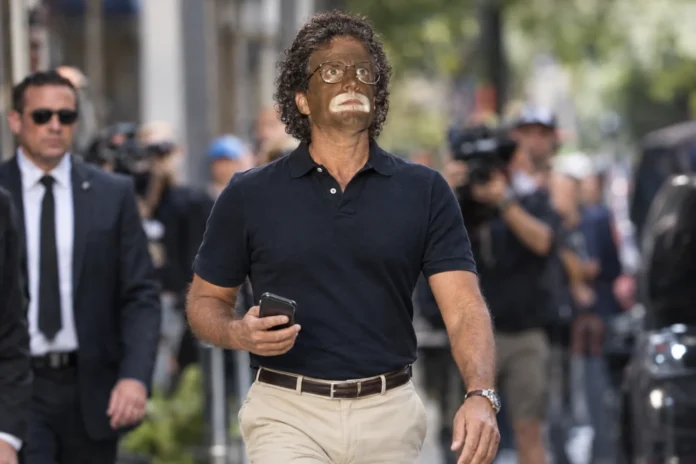
The Ted Danson blackface controversy is one of the most talked-about celebrity scandals of the 1990s. In fall 1993, the Cheers star walked on stage at a New York Friars Club roast for his then-girlfriend Whoopi Goldberg wearing dark makeup and huge white lips. More than 30 years later, the 78-year-old actor is still sorry, and he says he will never stop apologizing. I’ve followed celebrity apologies for years, and this one stands out. It is not a single statement. It is a story Danson keeps revisiting, even at the height of a late-career revival.
Biography Table
| Field | Details |
|---|---|
| Full Name | Edward Bridge Danson III |
| Nickname/Stage Name | Ted Danson |
| Date of Birth | December 29, 1947 |
| Place of Birth | San Diego, California, USA |
| Age | 78 |
| Nationality | American |
| Zodiac Sign | Capricorn |
| Profession/Occupation | Actor, producer |
| Years Active | 1975 – present |
| Education | Kent School; Stanford University; Carnegie Mellon University (BFA) |
| Genre/Field | Television comedy, film, drama |
| Spouse/Partner | Mary Steenburgen (m. 1995); previously Casey Coates (1977–1993) and Randall Gosch (1970–1975) |
| Children | Kate and Alexis |
| Parents | Edward Bridge Danson Jr. and Jessica MacMaster Danson |
| Net Worth | Estimated around $80 million |
| Height | 6 ft 2 in (1.88 m) |
| Eye Color | Blue |
| Hair Color | Gray (formerly brown) |
| Notable Works | Cheers, Becker, CSI, The Good Place, Mr. Mayor, A Man on the Inside, Made in America |
| Awards/Honors | Two Primetime Emmy Awards, multiple Golden Globe Awards, star on the Hollywood Walk of Fame |
What Was the Ted Danson Blackface Controversy?
The controversy centers on a single night: October 8, 1993. At a Friars Club roast honoring Whoopi Goldberg, Danson performed a routine in blackface, used the N-word repeatedly, and told sexual jokes about their relationship. The audience was large, the material was vile, and the reaction was immediate.
What makes this story unusual is its context. Danson wasn’t a random comic mocking a Black woman from a distance. He was her boyfriend, and Goldberg herself helped shape the act. That twist is why the incident still sparks debate rather than simple condemnation.
It also never really went away. The scandal resurfaced online during later conversations about race, and it came back strongly in 2026 when Danson discussed it at length on a podcast. For many younger viewers who know him from The Good Place, this was their first time hearing about it.
Ted Danson Blackface Controversy Timeline
| Date | Event |
|---|---|
| 1992 | Danson and Goldberg meet while filming Made in America |
| Early 1993 | Tabloids expose their affair; Danson’s wife files for divorce |
| May 1993 | Cheers ends its 11-season run |
| October 8, 1993 | Friars Club roast at the New York Hilton |
| Late 1993 | Danson and Goldberg break up, less than a month after the roast |
| 1995 | Danson marries Mary Steenburgen |
| June 3, 2026 | Danson apologizes again on W. Kamau Bell’s Who’s With Me? podcast |
Ted Danson and Whoopi Goldberg’s Relationship Before the Roast
Danson and Goldberg fell in love on set while filming the 1993 comedy Made in America. At the time, Danson was married to producer Cassandra “Casey” Coates. When the tabloids exposed the affair, Coates served divorce papers, and the couple’s private life turned into a public spectacle.
Both were huge stars. Cheers drew around 42 million households for its finale, and Goldberg was at the height of her film career after Sister Act. An interracial couple of that profile drew intense attention, including a People magazine cover story and constant paparazzi.
Their romance lasted roughly 18 months. By summer and fall 1993, it was already cooling. That detail matters, because it explains why the roast happened at all. The couple reportedly wanted to back out, but tickets were already sold and withdrawing wasn’t a realistic option.
Inside the 1993 Friars Club Roast
The roast took place at the New York Hilton in New York City as a closed-door tribute. Friars Club roasts were known for raunchy, ribald jokes, and unlike later televised roasts, this one was meant to stay private. Danson served as a featured roaster, with the event built around Goldberg.
Danson came out in dark makeup with exaggerated white lips, a classic minstrel look. He reportedly used the N-word more than a dozen times. The act included racially charged jokes, sexual jokes about their sex life, and watermelon imagery, a long-standing racist trope.
The crowd was about 3,000 people, a mix of celebrities, club members, and industry figures. One bit reportedly joked about Goldberg cleaning his parents’ house. Whatever the intended irony, the jokes landed as plain racism for many of those in the room.
Audience Reaction and Immediate Backlash
The reaction inside the hotel was split, and much of it was harsh. Some guests laughed, many sat stone-faced, and several reportedly left the event early. Danson later said he realized within about 20 seconds that he was in trouble, comparing it to sticking his finger in a light socket.
The criticism spread fast once news of the act leaked. New York’s mayor, David Dinkins, the city’s first Black mayor, publicly said the performance went too far. Talk show host Montel Williams was among the loudest critics and reportedly resigned from the club in protest.
The Friars Club, then an all-male club with a long history, issued an apology. The story made front pages across the country. For an event meant to be secretive, the fallout was anything but private, and it became a national debate within days.
Whoopi Goldberg’s Defense of Ted Danson
Goldberg stood by Danson from the start. She said she wrote much of the material, helped plan the look, and even hired the makeup artist. In her view, she was the target of the jokes, and the critics were misreading the act.
She also argued that Danson showed courage by performing it. She pushed back on the outrage, suggesting critics were acting like publicity hounds and that the attention was undeserved. Her support gave Danson cover, but it didn’t silence the backlash.
That defense created a strange situation. A Black woman was publicly saying the act was fine, while many Black critics and public figures said it was deeply hurtful. Decades later, Danson made clear her support never lessened his own responsibility.
Is There a Ted Danson Blackface Video or Picture?
This is one of the most searched questions about the scandal. The short answer is that no full Ted Danson blackface roast video has ever surfaced publicly. Because it was a private event, there’s no official broadcast or “original video” of the complete performance.
What does exist is limited. Photos of Danson in makeup have circulated for years, and a Ted Danson blackface picture often appears when the story resurfaces online. A brief clip showing his entrance and Goldberg laughing has appeared in a documentary about the Friars, I Hear Laughter: A Salute to the Friars.
Beyond that, a short audio recording of part of the act has been discussed, and later radio parodies, including from Howard Stern, mocked the incident. If you find a site claiming to host the full roast video, be skeptical. Most are clips, parodies, or mislabeled footage.
Ted Danson’s Blackface Apology on “Who’s With Me?”
On June 3, 2026, Danson appeared on W. Kamau Bell’s Who’s With Me? podcast and revisited the incident in detail. His core message was clear: he wants to apologize for the rest of his life. He called his younger self arrogant, entitled, and stupid.
He was careful to separate explanations from excuses. He walked through his thinking at the time but repeated that none of it justified blackface or slurs. He also noted that someone today can stumble on the photos online and be shocked, which is why he wants to keep talking about it.
In his closing words on the topic, he apologized again to anyone listening. He said it was not his place, as a white man, to think he had a meaningful statement about race to offer through that act. It was a direct, unqualified apology, not a hedged one.
Why Danson Says He Chose Blackface
Danson explained that he’s a comic actor, not a stand-up comedian. He knew he couldn’t match people like Robin Williams in raw stand-up. His thinking was that if the material was funny, he could deliver it, so the look became a way to give himself license.
He also said he worked on the act for months and felt sure he could pull it off. The roast format encouraged outrageous things, and Goldberg’s own stand-up voice shaped the jokes. He believed the blackface would turn the material into a kind of performance theater.
There was a personal layer too. Danson said the tabloid scrutiny of their affair was harsh, and he wanted to push back against it. Looking back, he sees that impulse as misguided and hurtful, not clever.
Intent vs. Impact
The most important part of Danson’s apology is his rejection of his own intentions. He said he knew what was in his heart, but that his intentions don’t matter. What matters is the effect his conduct had on people.
This is a big shift from the 1993 defense, which leaned heavily on intent and love between the couple. Danson now says he simply hadn’t thought it through. He focuses on impact, not on proving he meant well.
In my experience reviewing public apologies, this is rare. Most celebrities stay stuck on intent. Danson moving past that is a big reason his apology lands as sincere rather than defensive.
Danson’s Earlier Reflections on the Roast
The 2026 podcast wasn’t the first time he addressed it. In a 1993 TV interview, shortly after the backlash, he spoke about it, but the tone was more defensive. For years after that, he rarely discussed the roast in public.
Decades later, in a radio interview around 2009, he described the night as one of the most graceless moments of his life. That was an early sign he no longer saw it as a misunderstood joke.
The difference between those earlier comments and 2026 is depth. The later apology names the specific harm, accepts full responsibility, and promises to keep apologizing. Earlier reflections came across as regret; the newer one reads as accountability.
W. Kamau Bell’s Response
Bell, a comedian and filmmaker who often covers race, praised Danson during the conversation. He said he wanted to give Danson his flowers for knowing how to apologize in public. Coming from Bell, that carried real weight.
Bell also framed the scandal as a tipping point in public awareness about blackface. In his view, it was a moment of cancel culture before the term even had a name. That framing helps explain why the incident still matters.
He found it admirable that Danson keeps discussing the incident instead of hiding from it. For Bell, admitting he was wrong, again and on the record, is what separates a real apology from damage control.
How the 1993 Media Covered It vs. Today
The 1993 coverage was strikingly simplistic by today’s standards. Many white commentators framed it as a free speech or political correctness issue. Some defended Danson as just “being funny” and treated critics as oversensitive.
Black critics and academics offered a more sophisticated reading. They pointed to the long history of blackface and asked why Goldberg’s enjoyment should settle the question for everyone else. The New York Times and other outlets covered both sides as a national flash point.
Today the framing is very different. After events like the 2019 Virginia Gov. Ralph Northam blackface photo scandal, blackface is widely seen as indefensible regardless of context. That shift is exactly why the 2026 apology drew so much attention.
Lasting Impact on Danson’s Career and Family
In the short term, the fallout was real. Danson reportedly lost some corporate work and sponsorships, and the press attention was intense. He has said he felt scared at the time, and that the public image hit was serious.
His family felt it as well. Danson described the pain of seeing loved ones hurt by the coverage. His later wife, Mary Steenburgen, came into his life after this period, and he has spoken about how he grew in the years that followed.
Long term, his career recovered and thrived, with hits like Becker, The Good Place, and A Man on the Inside. Still, the controversy resurfaced online during Black Lives Matter conversations and other moments of racial reckoning. It remains part of his public story, which is why he chooses to address it himself.
What Danson’s Apology Teaches About Public Apologies
Communication researchers study apologies through apologia strategies. Danson’s early 1993 response leaned on defeasibility and good intentions, essentially saying he meant no harm and acted with Goldberg’s blessing. That approach rarely satisfies critics.
His 2026 approach uses mortification, which means fully admitting wrongdoing without excuses. He also points toward corrective action by committing to keep talking about it openly. Those two strategies together are what experts usually see as the most credible.
If you’re studying crisis communication, this is a useful case. Here’s what made the later apology work:
- He named the exact harm instead of speaking vaguely.
- He refused to hide behind Goldberg’s approval.
- He rejected intent as a defense.
- He committed to an ongoing apology, not a one-time statement.
FAQs
What did Ted Danson do at the 1993 Whoopi Goldberg roast?
At the October 1993 Friars Club roast, Danson performed in blackface with exaggerated white lips. He used racial slurs and made sexual jokes about his relationship with Goldberg. The ted danson blackface roast quickly became a national controversy.
Did Whoopi Goldberg support Ted Danson’s blackface act?
Yes. Goldberg said she helped write the material and arranged the makeup. In the whoopi goldberg ted danson blackface story, she defended him publicly, though Danson now says her support doesn’t excuse what he did.
Is the original Ted Danson blackface video available online?
No full original video of the roast has ever been released. Only photos, a short entrance clip in a Friars documentary, and limited audio have surfaced. Sites claiming to show the complete ted danson blackface original video are usually sharing clips or parodies.
When did Ted Danson apologize for blackface?
Danson gave his most detailed ted danson blackface apology on June 3, 2026, on W. Kamau Bell’s Who’s With Me? podcast. He had expressed regret earlier, but this was the most direct and complete statement.
Were Ted Danson and Whoopi Goldberg still together after the roast?
No. They broke up less than a month after the roast. Their relationship was already ending, and they had tried to withdraw from the event before it happened.
Did the blackface controversy hurt Ted Danson’s career?
It caused short-term damage, including lost corporate work and harsh press. His career recovered strongly, but the ted danson blackface controversy still resurfaces online, which is one reason he keeps addressing it.
Read About : michael bay movies
