
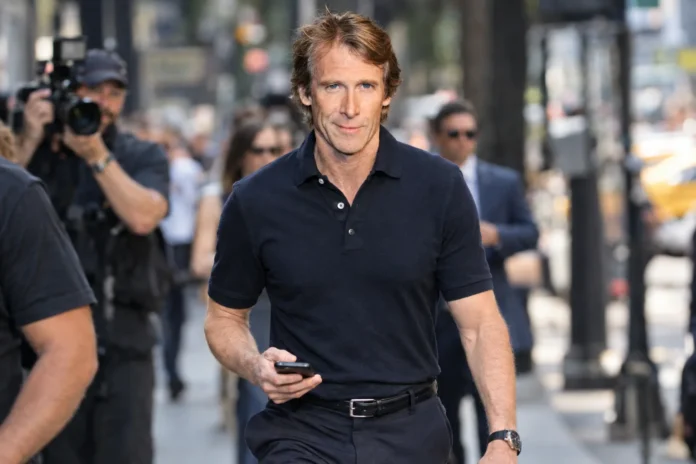
Few directors split audiences like Michael Bay. Michael Bay movies have earned billions at the box office, given modern action cinema its loudest visual language, and made “Bayhem” a word critics use with both affection and contempt. This guide covers every film he has directed, from his 1995 debut to his latest work. It also covers how his style works, what he produces, and what he is worth today.
Biography Table
| Field | Details |
|---|---|
| Full Name | Michael Benjamin Bay |
| Nickname/Stage Name | Michael Bay |
| Date of Birth | February 17, 1965 |
| Place of Birth | Los Angeles, California, USA |
| Age | 61 years |
| Nationality | American |
| Zodiac Sign | Aquarius |
| Profession/Occupation | Film director, producer |
| Years Active | 1990 – present |
| Education | Wesleyan University (BA, Film); ArtCenter College of Design |
| Genre/Field | Action, sci-fi, military thriller, disaster |
| Spouse/Partner | Never married |
| Children | None publicly known |
| Parents | Adopted; raised by Harriet and Jim Bay |
| Net Worth | Estimated $450 million |
| Notable Works | Bad Boys, The Rock, Armageddon, Pearl Harbor, Transformers series, Ambulance |
| Awards/Honors | Clio Awards for commercials; DGA Commercial Director of the Year (1995) |
| Social Media | Instagram (@michaelbay) |
Who Is Michael Bay?
Michael Bay is an American-born director and producer best known for big-budget action films packed with explosions, fast cutting, and sweeping camera movement. He has directed 15 feature films over more than 30 years, and together they have grossed well over $7 billion worldwide.
Bay was adopted as an infant and grew up in Los Angeles. As a teenager he got a job filing storyboards at Lucasfilm during Raiders of the Lost Ark. He later called it the moment he decided to make movies. He studied film at Wesleyan University and then at ArtCenter College of Design in Pasadena.
Before Hollywood, Bay made music videos and commercials at Propaganda Films. His “Got Milk?” ad featuring Aaron Burr won industry awards, and his videos for Meat Loaf and Tina Turner built his reputation. That commercial aesthetic, with bright cinematography, low-angle shots, and polished product shots, shaped everything he made later.
Producer Jerry Bruckheimer noticed that work and gave Bay his first feature. Bay has often been compared to Tony Scott, another Bruckheimer director with a music-video background. Where Scott leaned into grit, Bay leaned into gloss: chrome-tinted establishing shots, beautiful cars, and wall-to-wall spectacle.
Michael Bay Films at a Glance
Here is every feature film directed by Michael Bay, with approximate worldwide box office figures.
| Year | Film | Lead Cast | Worldwide Gross (approx.) |
|---|---|---|---|
| 1995 | Bad Boys | Will Smith, Martin Lawrence | $141 million |
| 1996 | The Rock | Sean Connery, Nicolas Cage | $335 million |
| 1998 | Armageddon | Bruce Willis, Ben Affleck | $553 million |
| 2001 | Pearl Harbor | Ben Affleck, Josh Hartnett | $449 million |
| 2003 | Bad Boys II | Will Smith, Martin Lawrence | $273 million |
| 2005 | The Island | Ewan McGregor, Scarlett Johansson | $163 million |
| 2007 | Transformers | Shia LaBeouf, Megan Fox | $709 million |
| 2009 | Transformers: Revenge of the Fallen | Shia LaBeouf | $836 million |
| 2011 | Transformers: Dark of the Moon | Shia LaBeouf | $1.12 billion |
| 2013 | Pain & Gain | Mark Wahlberg, Dwayne Johnson | $86 million |
| 2014 | Transformers: Age of Extinction | Mark Wahlberg | $1.1 billion |
| 2016 | 13 Hours: The Secret Soldiers of Benghazi | John Krasinski | $69 million |
| 2017 | Transformers: The Last Knight | Mark Wahlberg | $605 million |
| 2019 | 6 Underground | Ryan Reynolds | Netflix release |
| 2022 | Ambulance | Jake Gyllenhaal | $51 million |
He also directed the documentary We Are Storror (2025). That brings his directing credits to 16 if you count non-fiction work.
The 1990s Breakthrough Films
Bay’s first three films set the template for 1990s action. All three were Bruckheimer productions, and each one was bigger than the last. Two of them have since been released by the Criterion Collection.
Bad Boys (1995)
Bad Boys is a buddy-cop action-comedy about Miami PD detectives Mike Lowrey (Will Smith) and Marcus Burnett (Martin Lawrence). They must recover $100 million of heroin stolen from inside police headquarters. It was Bay’s first feature, made for about $19 million.
The script began with a sitcom-like premise and was first planned for Dana Carvey and Jon Lovitz. Bay cast two TV stars instead and encouraged them to improvise. Most of the snappy dialogue and foul-mouthed banter came from that freedom, and the chemistry between Smith and Lawrence carries the film.
On a rewatch, the plot holes and clichés are obvious, and the pacing sags in the middle. But the orange sunsets, shattered glass, and rapid editing already show the trademark style. It feels like a time capsule of 1990s action, borrowing from Lethal Weapon and 48 Hrs. while pointing somewhere new.
The film also launched Will Smith toward superstardom. A year later he starred in Independence Day, and the Bay–Smith partnership returned eight years later with a much bigger sequel.
The Rock (1996)
The Rock is widely seen as Michael Bay’s best film. Rogue Marine general Frank Hummel (Ed Harris) seizes Alcatraz and threatens San Francisco with rockets armed with VX gas. To stop him, the government pairs FBI chemical expert Stanley Goodspeed (Nicolas Cage) with John Patrick Mason (Sean Connery), a former British agent and the only man to escape Alcatraz.
What makes it work is the Connery–Cage chemistry and a villain who is morally gray. Hummel is a disgruntled soldier angry about how the military abandoned his men, not a cartoon terrorist. That gives the Navy SEALs standoff real tension and makes the film more than spectacle.
The midpoint car chase through San Francisco is pure Bay: choppy editing, a gung-ho hero, and wrecked cars everywhere. The memorable lines and sardonic dialogue still hold up. The Rock is the rare Bay film where character moments and action set pieces feel balanced.
Producer Don Simpson died during production, and the film is dedicated to him. It also had a long afterlife. Its influence shows up in later games like Call of Duty: Modern Warfare 2, and fans still debate the conspiracy theories in its plot.
Armageddon (1998)
Armageddon sends a crew of oil drillers into space to nuke an asteroid the size of Texas. Bruce Willis plays deep-core driller Harry Stamper, with Ben Affleck, Liv Tyler, Steve Buscemi, Michael Clarke Duncan, and Billy Bob Thornton around him.
It was the biggest film in the world in 1998. It beat its rival asteroid film Deep Impact and grossed about $553 million. J.J. Abrams shares screenwriting credit, and the Aerosmith song “I Don’t Want to Miss a Thing” became one of the decade’s biggest hits.
The premise is ludicrous and scientifically questionable, and Bay leans into it with patriotism, blue-collar American heroes, and sentimental romance. The destruction of New York opening and the Mir space station sequence show his rapid editing pushed to frantic levels, with shorter cuts and Dutch angles everywhere.
Critics called it bloated and noisy. Audiences treated it as popcorn entertainment. In my view, it has aged better as pure B-movie fun than as drama, and the father–daughter story still lands harder than it should.
The 2000s: From War Epic to Sci-Fi
After Armageddon, Bay tried to make prestige films and push his style into new genres. The results were mixed but always expensive.
Pearl Harbor (2001)
Pearl Harbor is Bay’s attempt at an epic historical drama. Written by Randall Wallace of Braveheart, it follows two fighter pilots (Ben Affleck and Josh Hartnett) and a nurse (Kate Beckinsale) caught in a love triangle before and after the 1941 attack.
The roughly 40-minute attack sequence is the reason to watch. Japanese planes sweep over Hawaii, ships burn, and civilians run through the chaos. The film won the Oscar for sound editing, and the bombing sequence is still technically impressive.
The problem is the melodramatic romance around it. Critics saw it as a Titanic-style wartime romance with historical errors and jingoistic tone, and it sits near 25% on Rotten Tomatoes. The extended coda covering the Doolittle Raid makes an already long film longer.
Today some fans treat it as a guilty pleasure or an underrated war film. It made about $449 million worldwide. But it remains the clearest example of Bay’s lack of restraint with real tragedy.
Bad Boys II (2003)
Bad Boys II takes everything from the first film and multiplies it. Mike and Marcus chase cocaine kingpin Hector Tapia through Miami and into Cuba, on a budget of about $130 million and a runtime of nearly two and a half hours.
The freeway chase, with cars thrown off a car-carrier truck, is one of the most famous action scenes of the 2000s. The finale sends Hummers straight through a shanty town. This is Bayhem at its most extreme, and the body count is enormous.
It also has a mean-spirited streak. The cops behave like antiheroes, the humor is abrasive, and a scene where they terrorize Marcus’s daughter’s teen date divides viewers even now. Some critics called it nihilistic, while fans love its dumb fun.
Edgar Wright and Simon Pegg loved it enough to spoof it in Hot Fuzz. That tells you how big its influence was. Exhausting and overlong, yes, but nobody else could have made it.
The Island (2005)
The Island is Bay’s first sci-fi thriller and his first real box-office flop. Set in 2019, it follows Lincoln Six Echo (Ewan McGregor) and Jordan Two Delta (Scarlett Johansson), residents of a sealed compound who believe they survived near-extinction.
The twist is that they are clones, grown as cloned products so wealthy clients can harvest them for organ transplants. The first half works like cerebral sci-fi in the style of THX 1138 and Logan’s Run, with sleek production design and held shots.
The second half turns into a turbo-charged chase thriller. It includes a big car chase and plenty of wreckage. The film also drew a copyright controversy because of its similarity to the 1979 B-movie Parts: The Clonus Horror, which ended in a settlement.
It made only about $163 million, mostly overseas. Many viewers now see it as an underrated idea that deserved a calmer film. It is still worth a watch for McGregor and Johansson’s empathetic performances.
The Transformers Michael Bay Era
From 2007 to 2017, Transformers Michael Bay was a franchise built on an old toy line. It became one of the highest-grossing series ever, with five films grossing around $4.4 billion combined. It also earned some of the worst reviews of his career.
Transformers (2007)
The first live-action Transformers was produced with Steven Spielberg and follows teenager Sam Witwicky (Shia LaBeouf), whose first car turns out to be the Autobot Bumblebee. It is basically a boy-and-his-car story, with Optimus Prime and the Autobots fighting the Decepticons over Earth.
The suspenseful first act, with Blackout attacking a U.S. base in Qatar, shows Bay at his best. The CGI transformations were groundbreaking, and the first reveal of Optimus Prime created a real sense of wonder, much like the brachiosaurus reveal in Jurassic Park.
The weak spots are crude humor, too many characters, and a dumb plot. The heavy product placement made some critics call it a toy commercial. The final battle also suffers from confusing, quick-cut action, where it is hard to tell which metal giant is which.
Still, the technical work, VFX, and Steve Jablonsky’s score made it a $709 million hit. It shaped blockbuster filmmaking for the next decade.
Transformers: Revenge of the Fallen (2009)
Revenge of the Fallen is widely considered the low point of the series. It was rushed through a two-year turnaround and hurt by the 2008 Writers’ Strike. Bay later admitted it started without a finished script.
The scattered story is full of gobbledygook mythology, deafening techno, and crude gags. The worst problem was Skids and Mudflap, twin robots criticized as racist stereotypes with a minstrel caricature quality.
There are good set pieces, such as the forest fight where Optimus Prime takes on several Decepticons. But at 150 minutes, the film feels like a theme park ride with no exit. It swept the Razzie Awards, including Worst Director.
Audiences went anyway. It grossed about $836 million, proof that the franchise brand was stronger than any review.
Transformers: Dark of the Moon (2011)
Dark of the Moon was partly a mea culpa. Bay openly acknowledged the backlash to the previous film, removed Skids and Mudflap, and toned down the racial humor.
The story ties the Autobots to the 1960s–70s space program, with a cameo from Buzz Aldrin and Leonard Nimoy voicing Sentinel Prime. Frances McDormand and John Malkovich add star power, though both feel like wasted talent.
The highlight is the Battle of Chicago, a long climax shot with native 3D cameras during the post-Avatar 3D boom. The 3D effects were some of the best of that era, and the Chicago destruction looks massive.
It became the first Bay film to pass $1 billion worldwide. The plot is still unclear and overlong, but technically it is the most polished entry in the series.
Transformers: Age of Extinction (2014)
Age of Extinction was a soft reboot with a new human cast led by Mark Wahlberg as struggling Texas inventor Cade Yeager. The barn-inventor first act has real working-class charm and feels fresher than anything in the previous two films.
The Autobots are now hunted by humans, led by CIA official Harold Attinger (Kelsey Grammer) and the bounty hunter Lockdown. The redesigned robots and the Dinobots, especially the Optimus vs. Grimlock fight, gave Paramount strong marketing material.
At nearly three hours, though, the film collapses into chaos. The last 30 minutes in Hong Kong are long, the villain’s motives are convoluted, and the action becomes hard to follow.
Critically reviled but commercially huge, it earned about $1.1 billion, largely thanks to China. It proved the franchise could survive without its original cast.
Transformers: The Last Knight (2017)
The Last Knight was Michael Bay’s final film as Transformers director. It reaches into the King Arthur legend, Merlin, and a WWII flashback to explain why Transformers have always been on Earth.
Anthony Hopkins clearly enjoys himself as a historian guarding the secret. The film has some memorable shots and a kind of kitchen-sink audacity in how much story it tries to cram in.
But the plot is convoluted, the subplots go nowhere, and many characters feel irrelevant. The film feels like it was made on autopilot and out of obligation, and it is simply too loud.
It earned about $605 million, a major underperformer by series standards. After it, Paramount moved the franchise to other directors, starting with Bumblebee.
Smaller Detours and Late-Career Films
Between the robots, Bay made films that were cheaper, stranger, or more personal. For many critics, these are where his most interesting work sits.
Pain & Gain (2013)
Pain & Gain is Bay’s passion project, a true crime dark comedy made for about $26 million between Transformers films. It tells the real story of the Sun Gym Gang, Miami bodybuilders who kidnapped, tortured, and extorted a wealthy businessman in the 1990s.
Mark Wahlberg, Dwayne Johnson, and Anthony Mackie play the gym-rat criminals chasing a twisted version of the American Dream. Tony Shalhoub is excellent as the blowhard victim, and Johnson’s comic timing is the film’s secret weapon.
Bay borrows from the Coens and Scorsese, and the result has been called “Goodfellas on steroids.” The stylized exaggeration works as satire, though some viewers found it mean-spirited toward the real victims’ families, and it takes liberties with history.
It is his most-discussed non-action film, and its gaudy style later fed into Ambulance. If you only know Bay through Transformers, start here.
13 Hours: The Secret Soldiers of Benghazi (2016)
13 Hours tells the story of six Annex security contractors who defended a CIA outpost in Benghazi, Libya, on September 11, 2012. John Krasinski leads a cast built around soldiers rather than stars.
Bay used handheld cameras, tight close-ups, and a desaturated palette to give it a documentary-like feel closer to Black Hawk Down than Armageddon. Practical effects and the siege structure make it one of his most visceral films.
The politics are the debate. Some critics saw it as right-wing or anti-Clinton propaganda, while others found it surprisingly apolitical and focused on the men on the ground. It clearly shows Bay’s military-loving perspective either way.
It earned only about $69 million but has found a strong second life on home video. It is his most restrained war film and works better than Pearl Harbor.
6 Underground (2019)
6 Underground was Netflix’s most expensive production at the time, with a reported budget of about $150 million. Ryan Reynolds plays “One,” a billionaire who fakes his death and builds a team of vigilantes to take down international criminals.
Written by Rhett Reese and Paul Wernick of Deadpool, it has the same deadpan humor. The opening car chase through Florence, Italy, with parkour and constant crashes, is one of the most over-the-top sequences Bay has ever filmed.
The plot is incoherent, and the whole film feels exhausting by the end. Still, it showed that streaming could fund pure blockbuster excess. The planned franchise never happened.
Ambulance (2022)
Ambulance is Bay’s 15th feature and his best-reviewed film in years. Adoptive brothers Danny (Jake Gyllenhaal) and Will Sharp (Yahya Abdul-Mateen II) rob a bank in Los Angeles. Will needs money for his wife’s medical bills, and they end up hijacking an ambulance with EMT Cam Thompson (Eiza González) and a wounded cop inside.
The confined ambulance setting forces Bay to focus. The film was made for about $40 million and relies on practical action, old-school stunts, and a militarized LAPD giving chase across the city.
The real star is the drone cinematography. Bay used FPV drones to dive down buildings and skim over freeways, a modern technique that made LA aerial photography feel new again. The final act is repetitive, but the experimenting is exciting.
It underperformed in theaters but has enjoyed a critical reappraisal on streaming. For me, it is the clearest sign that Bay still has new ideas.
We Are Storror (2025)
We Are Storror is Bay’s first documentary. It follows STORROR, a British parkour collective known for real stunts filmed with dynamic camera work.
Bay’s camerawork makes the incredible stunts look as big as any of his action set pieces. The film works best as a showcase of what these athletes can do.
The weak point is a thin human story. It hints at a deeper theme about friendship and risk but rarely slows its pace long enough to explore it.
Bayhem: Michael Bay’s Signature Style
“Bayhem” is the nickname for Michael Bay’s signature style. It means hyperkinetic visuals, rapid cutting, burning destruction, and sensory overload. You can recognize a Bay shot within seconds, which is rare for any action director.
Camera Movement and Slow Motion
The most famous Bay move is the 360-degree shot. The camera circles the main characters, usually from a low angle, as they stand up in slow motion. It appears in almost every film he has made, from Bad Boys to Transformers.
He rarely leaves the camera still. Whirling camera moves, shaky close-ups, and fast cutting create energy even in dialogue scenes. Fans see it as cinematic roller coaster design. Critics see it as chaos.
His editing approach rarely lets a shot last long. In the Transformers films, this sometimes makes action hard to follow. In The Rock and Ambulance, it works brilliantly.
Lens Flares and Practical Explosions
Bay loves lens flares, from the opening titles to his space sequences. They add a commercial shine that goes back to his music-video aesthetic.
He is also known for practical explosions done in camera rather than through post-production VFX. In the highway scene in Bad Boys II and parts of the original Transformers, real cars flip and real buses explode on set.
His crews have built custom rigs, like a go-kart camera, to get close to the action. This practical approach is why his destruction often feels heavier than in other CGI films.
American Patriotism, the Military, and Product Placement
American patriotism runs through nearly every Bay film. Sunset-lit American flags, military hardware, and soldiers who save the day show up in Armageddon, Pearl Harbor, and every Transformers film. The Pentagon has supported several of his productions with real equipment.
Product placement is the other trademark. The Transformers films alone have been counted with hundreds of brand appearances, with one analysis finding 555 placements across the series. Companies pay to appear because his films reach huge global audiences.
To critics, this makes his films feel like ads. To Bay, it is part of a commercial aesthetic he has never hidden.
Why Critics and Audiences Split on Michael Bay Films
Michael Bay is one of the most divisive directors in Hollywood. Audiences keep buying tickets, while critics often rank his films among the worst of their years.
The main criticism goes beyond style. Many reviews point to objectifying camera work on female characters, accusations of misogyny, dated gay jokes and gay-panic humor, and racial stereotypes in films like Revenge of the Fallen and Bad Boys II.
Defenders argue that Bay is a great technician who invented much of modern action cinema’s language. Directors who mock his films often borrow his shots. Ambulance and Pain & Gain have also shown more range than his reputation suggests.
The fairest view is that both sides are right. Bay’s craft is real, and so are his weaknesses as a storyteller.
Michael Bay as Producer: Platinum Dunes and TMNT
Beyond directing, Michael Bay is a major producer. He co-founded the production company Platinum Dunes with Brad Fuller and Andrew Form, which became known for remaking classic horror films.
Platinum Dunes made The Texas Chainsaw Massacre (2003), The Amityville Horror (2005), Friday the 13th (2009), and A Nightmare on Elm Street (2010). It later produced The Purge series and A Quiet Place, which were original and far better received.
Michael Bay TMNT searches usually refer to the two live-action Teenage Mutant Ninja Turtles films he produced: Teenage Mutant Ninja Turtles (2014) and Out of the Shadows (2016). Bay did not direct either one. Fans debated the redesigned turtles, but the 2014 film was a hit.
He also co-owns Invisible Narratives and has ties to digital media companies. That brings us to his most surprising headline of recent years.
Michael Bay and Skibidi Toilet
The Michael Bay Skibidi Toilet connection is real but messy. In 2024, reports said Bay was working with Invisible Narratives, a company he partly owns, to adapt the viral YouTube series created by Alexey Gerasimov.
In 2025, Invisible Narratives announced production had begun, with Bay’s longtime production designer Jeffrey Beecroft attached. A few weeks later, Bay posted a video denying he was directing the film and told fans to stop the rumors.
Since then, the company has said it is looking for the right studio partner for the film and TV projects. As of late 2026, there is no release date and no confirmed director. The best way to describe it is a project Bay is connected to through his company, not one he has confirmed he will direct.
Michael Bay Net Worth and Box Office Power
Michael Bay’s net worth is estimated at around $450 million, which puts him among the richest directors in Hollywood. Most of that comes from the Transformers films, where his directing and producing deals reportedly earned him well over $200 million.
His box office record explains the number. Four of his films passed $600 million worldwide, and two passed $1 billion. Studios have consistently trusted him with high budgets because his films usually earn their costs back.
He also earns from Platinum Dunes, digital media investments, and back-end deals on older hits. He has owned a private jet, several luxury homes, and cars that appeared in his films, including Transformers Camaros.
Michael Bay Wife and Personal Life
Fans often search for Michael Bay’s wife, but Bay has never married. He has kept his personal life mostly private, and he has no publicly known children.
He has been linked for years with actress Nicole Hiltz, though neither has said much about the relationship publicly. Bay rarely talks about romance in interviews.
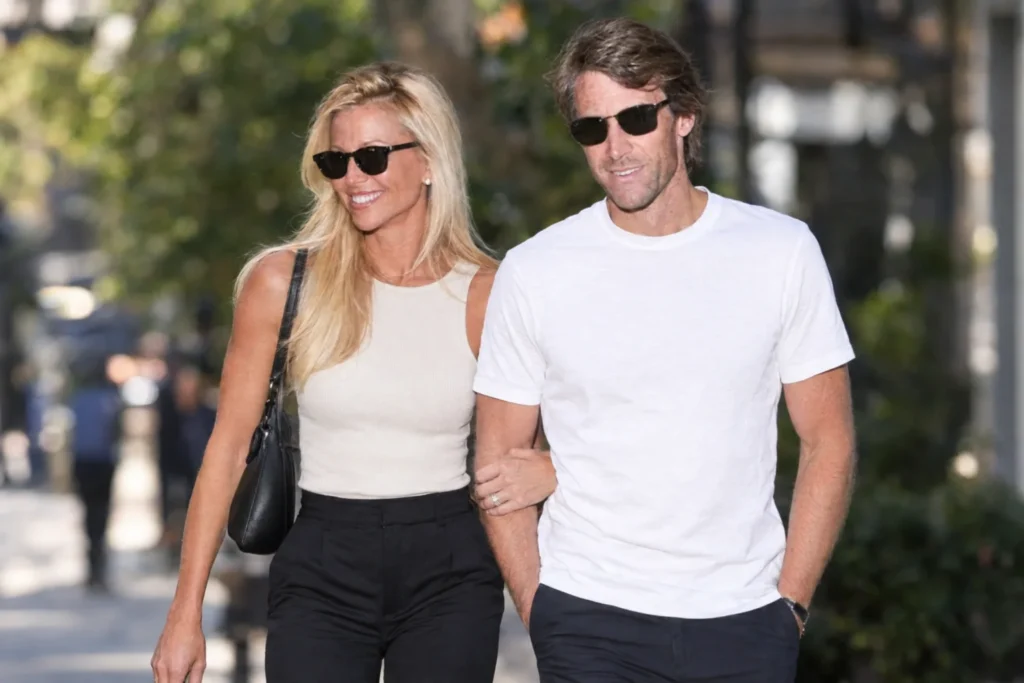
His family story is more public. He was adopted, and has said in interviews that he grew up in a creative household in Los Angeles. He has homes in Los Angeles and Miami, the city that appears in more of his films than any other.
FAQs
Who is Michael Bay?
Michael Bay is an American film director and producer born in 1965 in Los Angeles. He is known for big-budget action films such as Bad Boys, The Rock, Armageddon, and the Transformers series. He also co-founded the production company Platinum Dunes.
How many Transformers movies did Michael Bay direct?
Michael Bay directed five Transformers films between 2007 and 2017, ending with The Last Knight. Later films such as Bumblebee and Rise of the Beasts were made by other directors, while Bay stayed on as a producer.
What is the best Michael Bay movie?
Most critics and fans pick The Rock (1996) as his best film. It has strong performances from Sean Connery and Nicolas Cage and a well-built script. Ambulance and Pain & Gain are often named as his most underrated work.
Is Michael Bay directing the Skibidi Toilet movie?
Not officially. A company he partly owns is developing the adaptation, but Bay publicly denied directing it in 2025. No release date or director has been confirmed.
Did Michael Bay direct Teenage Mutant Ninja Turtles?
No. Michael Bay produced the 2014 and 2016 TMNT films through Platinum Dunes, but they were directed by Jonathan Liebesman and Dave Green.
What is Michael Bay’s next movie?
Bay has been attached to several projects, including a film adaptation of the OutRun video game with Sydney Sweeney. Studios have not given a release date yet, so fans should treat his next film as still in development.
Read About : snape as headmaster
